[Elsewhere being Alas, specifically. I'd wondered about making a post about the whole Palin circus, leaned towards 'no' simply because I believe that Bristol Palin, though she is breathing for two, is not a valid recipient of media oxygen other than when the McCain campaign decides to start lighting matches, which I am sure it will. But then Mandolin posted that roundup about privacy and its connection (or lack thereof) to reproductive rights, and I found it a good topic for some thinking out loud.]
One thing I’d say is that Bristol Palin’s privacy is not a reproductive rights issue; she deserves privacy because she’s a young woman who has never asked for the world’s media to be on her doorstep. She deserves privacy for the exact same reason all the other candidates’ children deserve privacy. We do not need to interrogate Bristol Palin, ever. Whenever the McCain campaign makes propaganda use of her, talks about what a wonderful choice she made, we need to interrogate the McCain campaign and slam them for their hypocrisy and their inhuman anti-choice values.
It is interesting to see who gets the privacy and who does not, though. The Obama daughters have been regularly paraded on stage because so many people in the media, and allegedly in the US at large, had a nervy, perverse fascination with the idea of a black first family, and the Obama campaign felt forced to respond to that. Because America is a racially unequal society those young black girls don’t get the right to privacy.
And now there’s a young mother-to-be in the spotlight; I don’t know about you, but I haven’t heard the name of her fiancé, nor read anything related to him. I also don’t know the names of any male children of anyone involved in this election. That Obama and Clinton don’t have any skews that, I’m sure - but I don’t even know if McCain, or Edwards, or most of the VP-possibles have children at all. The only people whose children have been talked about are Obama, Palin, and (to a much lesser extent) single father Biden (and there’s Chelsea Clinton, who was known to us from her father’s time in office. Quick, Britons, what’s the fastest rail route between Bristol and Chelsea?). I haven’t heard the names of Biden’s children. I don’t know anything about McCain’s children, not even how many he has, other than that he has at least one adopted child.
In other words, if you’re a white guy, your family gets more privacy. (Barring extremely odd circumstances like Biden’s - and if I may make an aside, I feel that the single father family I grew up in got too much privacy rather than too little; as Amanda wrote, privacy can be a shield for abuse, and also just for plain poor parenting. Single father families are far interrogated far less than single mother families, even given that they outnumber us by 10 to 1).
Showing posts with label feminism. Show all posts
Showing posts with label feminism. Show all posts
Tuesday, September 02, 2008

Saturday, August 09, 2008
Does Equality Pay Its Bills?
Big question. When you pass by equality trainwrecks on the internets, you sometimes see a blind faith in the free market to solve all our problems. I mean, the free market (which exists, honest) being the bastion of efficiency it is, if a problem still exists it must be because there's an economic upside to it, right? If action films with female leads were profitable, there'd be tons of them, but there aren't because it's just not profitable. If women's work was really as valuable as men's work, employers wouldn't discriminate against women, would they?
This faith seems to underlie a lot of the outright disbelief you sometimes meet when you talk to people about equal pay or media sexism. It's basically saying that the desire to make a profit is so great it must override the desire to be sexist, so sexism can't be occurring at the expense of profit, and any further attempts to fight sexism will cause economic harm.
FSF recently linked to a series of articles by Jennifer Kesler about how this blind faith applies wrt the Bechdel Test. One of these directly asks Why Discriminate If It Doesn't Profit?
Looking at the inflation-adjusted all-time box office, many of the top names are films that had a specific appeal to female audiences; Gone With The Wind, Titanic, The Sound Of Music, Doctor Zhivago. Three of these four were made a rather long time ago.
I'm not sold on Kelsey's reasoning simply because it relies on pathologising individuals; see her earlier post, Why Film Schools Teach Screenwriters Not To Pass The Bechdel Test:
I find it hard to believe that mere individuals can keep that shit running as long as they do, but does anyone have a better theory? It's important, this. Because the phenomenon goes beyond Hollywood and infests the real world.
Last year, Slate's Ray Fishman declared 'It Takes a Village...to fail to thank its female leader, no matter how good she is':
It's like Hollywood; however well the women perform, it doesn't register with the people who care. (Except that US cinema audiences seem to approve plenty). This really is sexism as a quantifiable pathology, and it merrily flies in the face of any desire for material gain; women suck, no matter how much they've improved your local governance.
Then there's a straightforward headline from workforce.com: Firms With More Women on Boards Perform Better Than Those That Don’t.
I strongly doubt that either this or the India survey demonstrate any female superiority when it comes to governance; rather, they represent the replacing of mediocre men with brilliant women who in other circumstances are locked out of high places. But the question's still there - if female board members have such a marked effect on profits, why are there so few of them?
If hiring women is basically a way of getting free money, why are so many companies scared of the idea?
When talking about the pay gap, I tend to link to this: the story of the UK's largest ever equal pay settlement:
My suspicion is that the fear of equal pay claims - as in Hollywood - is entirely real; equal pay for equal work means that men will have to take home less, one way or another. Councils in the UK - who finally implemented their equal pay agreements in 2006 - complained that they need central government assistance in order to pay women what their work was really worth. Boo fucking hoo; progressive taxation (as if that existed) passes money from wealthier men to poorer women, cry me a river. Hollywood? Would probably get more money overall if it stopped failing so often. But less of it would go to men. And that would somehow be so threatening it's worth paying to make it go away.
How far does the threat go? Well, the NYT is calling bullshit on the different ways we frame men at home vs. women at home here:
It goes back to families and parenting. It usually does.
This faith seems to underlie a lot of the outright disbelief you sometimes meet when you talk to people about equal pay or media sexism. It's basically saying that the desire to make a profit is so great it must override the desire to be sexist, so sexism can't be occurring at the expense of profit, and any further attempts to fight sexism will cause economic harm.
FSF recently linked to a series of articles by Jennifer Kesler about how this blind faith applies wrt the Bechdel Test. One of these directly asks Why Discriminate If It Doesn't Profit?
What tipped me off was that whenever film students pointed out how movies/shows for, by or about women had indeed profited, film professionals wouldn’t hear it. Those movies/shows were exceptions! Or it was really the alien/Terminator/Hannibal Lechter people wanted to see, not Ripley, Connor or Starling. Etc. It couldn’t be that people were actually happy to see movies/shows for, by or about women, because that was impossible - end of argument.
...people who claim to worship profit above all else sometimes actually worship what they want to believe is profitable.
Looking at the inflation-adjusted all-time box office, many of the top names are films that had a specific appeal to female audiences; Gone With The Wind, Titanic, The Sound Of Music, Doctor Zhivago. Three of these four were made a rather long time ago.
I'm not sold on Kelsey's reasoning simply because it relies on pathologising individuals; see her earlier post, Why Film Schools Teach Screenwriters Not To Pass The Bechdel Test:
I concluded Hollywood was was dominated by perpetual pre-adolescent boys making the movies they wanted to see, and using the “target audience” - a construct based on partial truths and twisted math - to perpetuate their own desires.
I find it hard to believe that mere individuals can keep that shit running as long as they do, but does anyone have a better theory? It's important, this. Because the phenomenon goes beyond Hollywood and infests the real world.
Last year, Slate's Ray Fishman declared 'It Takes a Village...to fail to thank its female leader, no matter how good she is':
Rural Indians are learning firsthand what it's like to live under female leadership as a result of a 1991 law that restricted one-third of village council elections to female candidates. The villagers' experiences are analyzed by economists Esther Duflo and Petia Topalova in a recent unpublished study. Using opinion surveys and data on local "public goods"—like schools, roads, and water pumps—Duflo and Topalova find that the villages headed by women invested in more services that benefited the entire community than did those with gender-neutral elections, nearly all of which were won by men. But as the opinion polls showed, for all their effectiveness, the women's governance was literally a thankless effort, with the new leaders getting lower approval ratings than their male counterparts.
[...] They were also less corrupt—villagers with female-headed councils were 25 percent less likely to report having to pay bribes to access basic services like getting ration cards or receiving medical attention.
It's like Hollywood; however well the women perform, it doesn't register with the people who care. (Except that US cinema audiences seem to approve plenty). This really is sexism as a quantifiable pathology, and it merrily flies in the face of any desire for material gain; women suck, no matter how much they've improved your local governance.
Then there's a straightforward headline from workforce.com: Firms With More Women on Boards Perform Better Than Those That Don’t.
During the four-year span of the reporting for the study, Fortune 500 companies with the highest percentage of women on their boards saw equity returns that were 53 percent higher than those companies with the fewest number of women on their boards.
I strongly doubt that either this or the India survey demonstrate any female superiority when it comes to governance; rather, they represent the replacing of mediocre men with brilliant women who in other circumstances are locked out of high places. But the question's still there - if female board members have such a marked effect on profits, why are there so few of them?
If hiring women is basically a way of getting free money, why are so many companies scared of the idea?
When talking about the pay gap, I tend to link to this: the story of the UK's largest ever equal pay settlement:
Early last year, 1,600 women, all of them health workers at two Cumbrian hospitals, won the biggest ever equal pay deal: a total of £300m. At a time when the pay gap between men and women is actually growing, the settlement should have sparked a clamour for equality. Instead, there has since been an eerie silence. The story of how the women, underpaid for years, spurned an offer of £1.5m compensation and achieved £300m, all from one health authority, has been mysteriously buried, as if it were an embarrassment. They sense a fear of "mutually assured destruction" wafting around the headquarters of their union, Unison, which represents more than a million public service workers: a feeling that the settlement was too huge, and the ramifications of it just too enormous - what would happen if it triggered equal pay claims across the whole of the public sector?
[...] The claim was possible because of "equal value", a concept contained in a European directive announced during a late sitting in the Commons 20 years ago by a reluctant, and drunk, employment minister, Alan Clark. It allows different jobs to be compared for skill, complexity and responsibility; it focuses on the work, not the job. In detail, the claim translated the gothic arithmetic and arcane patois of industrial relations into the everyday life of men and women: everything, from bonus, to pension, to the length of the working week, to a working life. "It took a while to convince some of them that what they did was not only of equal value to a man, but more important," says Doyle.
A job evaluation expert, Sue Hastings, assessed the Cumbria dossier and reported that the cases were a golden equal pay opportunity for "exactly the people who ought to get it" - nurses who had been undergraded for decades, cleaners, telephonists and sterile services staff, who prepare instruments for surgery and who had been stuck on the same grade as washers-up since the health service was founded. Doyle had found men willing to stand as comparators: a wall-washer earning £3,000 a year more - and working 104 fewer hours a year - than a seamstress and sterile services staff; a plumber earning more than a nurse; a specialised nurse on a cancer ward, at the top of her scale, earning £8,000 a year less than a plant maintenance man; a nurse on £9,000 less than an engineer.
My suspicion is that the fear of equal pay claims - as in Hollywood - is entirely real; equal pay for equal work means that men will have to take home less, one way or another. Councils in the UK - who finally implemented their equal pay agreements in 2006 - complained that they need central government assistance in order to pay women what their work was really worth. Boo fucking hoo; progressive taxation (as if that existed) passes money from wealthier men to poorer women, cry me a river. Hollywood? Would probably get more money overall if it stopped failing so often. But less of it would go to men. And that would somehow be so threatening it's worth paying to make it go away.
How far does the threat go? Well, the NYT is calling bullshit on the different ways we frame men at home vs. women at home here:
But when men in their prime working years drop out of the workforce we don’t say they’ve gone home to be with their kids.
We say they’re unemployed.
It goes back to families and parenting. It usually does.
Tuesday, July 15, 2008
on dickwads:
I'm a bit late on this one, but Ren and Belle are spreading word about Kyle Payne, who is a blogger - a man who both blogs and does IRL conference stuff against pornography - who has pleaded guilty to breaking into a woman's bedroom, assaulting her and taking nude photographs of her in her sleep. He is still merrily blogging away, and presumably will continue to do so until he gets put away. What. As Belle reports, he is facing an open sentencing at Buena Vista County Courthouse, Storm Lake, Iowa on August 11th. If you live nearby, you might want to show up and have your word on that.
Someone else is being a dickwad lately: Obama and a supporter of his, comedian Bernie Mac. Lisa K is just plain mad about this. Gina brings the context:
I am avoiding most threads about this one; my fee-fees, they are slighted. (Yeah, pass me a hanky). But ultimately I'm reminded of Obama's early ties to gay-bashing preachers - something that put me off a lot at the time but later became a 'teachable moment', and also a tool with which to extract promises and declarations of tolerance. (Promises. Declarations. Yeah.)
My fee-fees. But get down to blood and bone and there's something that matters far more; Iraq, and the continuing and consistent commitment to getting out. A commitment to not continuing, or repeating, such massive bloodshed and extortion. I'm going to c/p from a MoveOn mailing here, even though I hate their tone, because it has all the important bits in it:
They added a thing Obama said today:
Someone else is being a dickwad lately: Obama and a supporter of his, comedian Bernie Mac. Lisa K is just plain mad about this. Gina brings the context:
Most Black women know that the standard fare for African American comedians is anti-Black woman attacks. It is always acceptable to make us the butt of their jokes. They usually get a pass however by the Black community, because the people they are insulting are Black women and nobody really cares about us anyway. No Black woman is immune from the anti-Black woman musing of these Black comedians, not even a potential Black First Lady, afterall, she’s a Black woman, and nobody really cares about us anyway. The only people that get into hot water for disparaging Black women are White people.
[...]Let’s be clear, Bernie Mac didn’t get shouted down because of his sexism, he got shouted down because he embarrassed Barack Obama. Sexism and misogyny by Black entertainers is permitted and even rewarded. It was refreshing to see someone confront it, whatever the reason. They were right, implying that Black women are inherently unsuitable to serve as First Lady of the United States of America is not funny to me.
I am avoiding most threads about this one; my fee-fees, they are slighted. (Yeah, pass me a hanky). But ultimately I'm reminded of Obama's early ties to gay-bashing preachers - something that put me off a lot at the time but later became a 'teachable moment', and also a tool with which to extract promises and declarations of tolerance. (Promises. Declarations. Yeah.)
My fee-fees. But get down to blood and bone and there's something that matters far more; Iraq, and the continuing and consistent commitment to getting out. A commitment to not continuing, or repeating, such massive bloodshed and extortion. I'm going to c/p from a MoveOn mailing here, even though I hate their tone, because it has all the important bits in it:
Iraqis want U.S. Troops out. No one was expecting Iraqi Prime Minister Nouri al-Maliki to speak up in favor of withdrawal—after all, he's close with the Bush administration. But with elections in Iraq coming up, and a great majority of Iraqis opposed to a prolonged U.S. occupation, Maliki can't afford to toe the Bush line. So he's surprised everyone by standing up this week for a timetable for troop withdrawals and a date certain to end the war. The LA Times headline reads, "Iraqi prime minister advocates withdrawal timeline."
As a result, the "endless war agreement" Bush has been pushing fell through. Since January, hundreds of thousands of us pushed Congress to stand up to President Bush's proposed treaty with Iraq, which would have tied the next President's hands and made it much harder to get out. This week, the Washington Post reported that that agreement has fallen through—Iraqi leaders are putting their feet down and demanding a much shorter agreement.
And now even the Pentagon is considering faster timelines. According to reporter Michael Hirsh at Newsweek, "a forthcoming Pentagon-sponsored report" will recommend a big drawdown of troops—suggesting "that U.S. forces be reduced to as few as 50,000 by the spring of 2009, down from about 150,000 now."
In other words, it's now clear: Most Americans are for a timeline, and so are most Iraqis. And even experts in the Pentagon agree.
For his part, Barack Obama is using these developments to hammer home the point that John McCain and President Bush are now isolated in their resistance to any kind of timeline for withdrawal. He wrote an Op-Ed in the New York Times yesterday that reaffirmed his commitment to a timeline that would have all combat troops out of Iraq in 16 months.
It concludes, "Unlike Senator McCain, I would make it absolutely clear that we seek no presence in Iraq similar to our permanent bases in South Korea. . . [F]or far too long, those responsible for the greatest strategic blunder in the recent history of American foreign policy have ignored useful debate in favor of making false charges about flip-flops and surrender. It's not going to work this time. It's time to end this war."
They added a thing Obama said today:
George Bush and John McCain don't have a strategy for success in Iraq—they have a strategy for staying in Iraq. They said we couldn't leave when violence was up, they say we can't leave when violence is down. They refuse to press the Iraqis to make tough choices, and they label any timetable to redeploy our troops "surrender," even though we would be turning Iraq over to a sovereign Iraqi government—not to a terrorist enemy. Theirs is an endless focus on tactics inside Iraq, with no consideration of our strategy to face threats beyond Iraq's borders.
Thursday, March 20, 2008
five years.
M is putting a supermarket loyalty card back in his wallet. He pulls his Gamespot trade-in card out and waves it at me. "Do you know what this is?"
"Hmm?"
"A third of a Wii." (We have recently traded a v. large pile of no-longer-wanted stuff).
"That's good. I think we should measure all currency in game consoles now. Way better than dollars and cents."
"Yeah. Right now the Wii is worth more than the fucking economy."
Today is the Blogswarm Against The War, because we have been doing this for five freaking years now. I am caught up in silence, sadly, but there is one thing connected to the war I wanted to jot down, because it has been bugging me in blogland lately; Ferraro, blah, Steinem, blah, Feldt - especially Feldt. I mean, just look at Feldt:
Listen, bitchface - if there was any responsibility blah to embrace power blah and join together to particularly improve the lot of blahdy freaking blah, then Hillary would have fucking remembered that when she voted to [make other people] go to Iraq. Those bombs don't just fall on guys, you know? And while the liberties afforded to women in Iraq had been sliding downhill since the first Gulf War, the invasion has given it another good shove.
I think I can safely say that I feel as much 'responsibility' toward this rich lawyer lady as she did for the women of Iraq.
I'm increasingly feeling that if by some great misfortune we don't wind up with a President Obama in November, I will feel like the world has missed a huge opportunity - something far bigger than missing out on expressing blah blah movement goals blah, which really socked one to The Patriarchy when we elected Maggie Thatcher, eh? (My national identity is mixed up this week. I can't vote but if I can I'd like to help out the Obama campaign in November). So, electionish links that everyone must read:
BlackAmazon on how aware of history everyone is!
Daisy on the whole Wright business.
Crap, just past midnight. I tried ;__;
"Hmm?"
"A third of a Wii." (We have recently traded a v. large pile of no-longer-wanted stuff).
"That's good. I think we should measure all currency in game consoles now. Way better than dollars and cents."
"Yeah. Right now the Wii is worth more than the fucking economy."
Today is the Blogswarm Against The War, because we have been doing this for five freaking years now. I am caught up in silence, sadly, but there is one thing connected to the war I wanted to jot down, because it has been bugging me in blogland lately; Ferraro, blah, Steinem, blah, Feldt - especially Feldt. I mean, just look at Feldt:
I credit feminism and feminists for doing many good things, but one thing we have failed miserably at is teaching each succeeding cohort to embrace the power and the responsibility of joining together as a movement to achieve goals that particularly improve the lot of women, just as every other group does and is expected to do.
We progressive women, we feminists who are activists in a thousand worthy social causes, might decide to squander this Moment and justify in a thousand ways why it’s our right to decide as individuals when we choose our candidate.
Well, yes, it is our right. But is it the sum total of our responsibility? Is it enough to really, really like Obama? Is it enough to flee from Hillary Clinton because of, say, one vote we didn’t like (even though her opponent never had to put his vote where his anti-war voice now is)?
Listen, bitchface - if there was any responsibility blah to embrace power blah and join together to particularly improve the lot of blahdy freaking blah, then Hillary would have fucking remembered that when she voted to [make other people] go to Iraq. Those bombs don't just fall on guys, you know? And while the liberties afforded to women in Iraq had been sliding downhill since the first Gulf War, the invasion has given it another good shove.
I think I can safely say that I feel as much 'responsibility' toward this rich lawyer lady as she did for the women of Iraq.
I'm increasingly feeling that if by some great misfortune we don't wind up with a President Obama in November, I will feel like the world has missed a huge opportunity - something far bigger than missing out on expressing blah blah movement goals blah, which really socked one to The Patriarchy when we elected Maggie Thatcher, eh? (My national identity is mixed up this week. I can't vote but if I can I'd like to help out the Obama campaign in November). So, electionish links that everyone must read:
BlackAmazon on how aware of history everyone is!
Daisy on the whole Wright business.
Crap, just past midnight. I tried ;__;
Thursday, December 27, 2007
How To Be A Postfeminist In 5 Easy Steps/many many links
Some time ago now Verte began musing on 'postfeminism': I went back to that now because of the way the word is used in the introduction to this book which I am reading. It's a collection of women's Telegraph obits - fun, quirky read so far, but here's how the two editors (both women) used the word 'postfeminism' in the intro:
5-step recap there:
1. We're the Telegraph, dummy. It's like printed Fox News.
2. We want women to continue to be special cases of people rather than people, just as things have always been.
3. We are poutywahwah with everyone who has tried to make the world otherwise, and will make disparaging comments about them at every opportunity.
4. We will make vaguely feminist sentiments - freedom to be mad, bad or dangerous to know - but we will use a magic word to make these sentiments safe rather than challenging to the white guy overlords.
5. This word is 'postfeminism'.
This is just one instance of the word, and an instance with a particularly strong dose of wingnut behind it, but these things are starting to pile up. I've seen Tricia Sullivan's works referred to as 'postfeminist' too. They are not. They are feminist. Perhaps 'third-wave' was the adjective the reviewer was looking for. I do not know. Is postfeminism an attempt to pretend feminism (like punk) never happened?
Now, links: The Debate Link: Why is the Only "Good" Civil Rights Leader a Dead One? makes many interesting points that I think run parallel to the whole postfeminism hoohah in one sense; privileged people desperately trying to deny that the civil rights movement was what it was but at the same time having to give brownie points to what it was because if they didn't, they'd look like the assholes they really are.
Irshad Manji explains why Benazir Bhutto sucked all along.
RenegadeEvolution comes bearing win: Creepy Dudes and
Creepy Chicks.
Qaequam on intellectual property. I love this topic, because it's unusual in human history, completely broken and also the backbone of the popular culture industries. One of my favourite instances of it is the Rider-Waite-Smith Copyright FAQ, which should generate much fun in 2012, but that is by the by.
David Wong et al explain in gruesome detail why we should all pretend 2007 never happened. I for one would cheerfully do that.
And, Erin at projectdownload has found an unexpected happy ending. Which is great but it didn't have to be that miraculous and the only reason it is is because a bunch of cruel, violent assholes with pretend respect for human life decided it should be so.
As they explored new opportunities, some women went a little over the top in their efforts to prove that they could be as good as their male counterparts. [...] The sex war is only a s mall part of the story. With one or two exceptions (notably the splendid battling feminist Bella Abzug) few of these women had time for 60s-style Women's Lib. [...] Almost to a woman our subjects would have been horrified by today's 'victim culture' and would have taken a dim view of introspection. [...] Nor is there any whingeing about male chauvinism, though most of them faced it to a degree that would be almost unimaginable now.
But this collection is not some worthy litany of women's achievements played out to the accompaniment of shattering glass ceilings. In these post-feminist days we can welcome the fact that freedom for women means not only freedom to be good, brave or clever, but freedom to be mad, bad or dangerous to know - sometimes all three. [...]
None of the women whose lives are chronicled here had their careers mapped out for them. They could not follow their fathers into the family regiment - or inherit a title. No rich uncle would take them to his club to introduce them to his contacts in the City. As a consequence their stories often have a free-wheeling, anarchic quality, full of surprises and sudden changes of direction.
5-step recap there:
1. We're the Telegraph, dummy. It's like printed Fox News.
2. We want women to continue to be special cases of people rather than people, just as things have always been.
3. We are poutywahwah with everyone who has tried to make the world otherwise, and will make disparaging comments about them at every opportunity.
4. We will make vaguely feminist sentiments - freedom to be mad, bad or dangerous to know - but we will use a magic word to make these sentiments safe rather than challenging to the white guy overlords.
5. This word is 'postfeminism'.
This is just one instance of the word, and an instance with a particularly strong dose of wingnut behind it, but these things are starting to pile up. I've seen Tricia Sullivan's works referred to as 'postfeminist' too. They are not. They are feminist. Perhaps 'third-wave' was the adjective the reviewer was looking for. I do not know. Is postfeminism an attempt to pretend feminism (like punk) never happened?
Now, links: The Debate Link: Why is the Only "Good" Civil Rights Leader a Dead One? makes many interesting points that I think run parallel to the whole postfeminism hoohah in one sense; privileged people desperately trying to deny that the civil rights movement was what it was but at the same time having to give brownie points to what it was because if they didn't, they'd look like the assholes they really are.
Irshad Manji explains why Benazir Bhutto sucked all along.
RenegadeEvolution comes bearing win: Creepy Dudes and
Creepy Chicks.
Qaequam on intellectual property. I love this topic, because it's unusual in human history, completely broken and also the backbone of the popular culture industries. One of my favourite instances of it is the Rider-Waite-Smith Copyright FAQ, which should generate much fun in 2012, but that is by the by.
David Wong et al explain in gruesome detail why we should all pretend 2007 never happened. I for one would cheerfully do that.
And, Erin at projectdownload has found an unexpected happy ending. Which is great but it didn't have to be that miraculous and the only reason it is is because a bunch of cruel, violent assholes with pretend respect for human life decided it should be so.
Monday, December 03, 2007
From The Whoreses' Mouth
[addendum: Helen Keeble has written some wonderful notes on the Weird Symposium, and I've collected the links here - my own, much inferior, notes are linked at the end of this post.]
This would be further to '1958'. Because, as I mentioned on t'other blog, I went to The Weird symposium, and then the Weird symposium went to a bar, and China Miéville bought me a drink and talked with me about whores.
I shall now leave a few lines blank to give you time to get over how wonderful my life is.
By then I was suffering from brain-mush induced by lack of sleep and passive inhalation of Immanuel Kant, so there are two important things about the whores in The Perpetual Train that I didn't manage to bring up, but on the whole, I forgive him. The first thing he said when I mentioned the topic was that he'd thought through the gender politics of it and was prepared to stand by that part of the story, both its stance and its way of getting there; I think he'd had this conversation before, and that he'd had it with himself before that.
It's a bit of a duckrabbit: looked at through the lens of an SF-reading feminist, it's part of one distinct pattern; read from the point of view of a revolutionary socialist (I can pretend to have that POV for a moment, right?) it's a different picture. He said he was reflecting the history of railway-making, in which women do appear only as prostitutes or as slaves; given that, presenting the prostitute as a wage-labourer who can, like male wage-labourers, be radicalised by their experiences under capitalism, is (he thinks) a positive. He's well aware of the general SF reading, though, and says 'they do not have hearts of gold.'
The big thing I did manage to get out was that it seemed like his male characters had jobs - surveyors, gendarmes, railwaymen - while his prostitutes were their jobs. He said he felt he'd written them as people who were in control of their labour - they had rules, enforced them, went on strike. He pointed out that the prostitutes are at the forefront of the workers' radicalisation, and reminded me of one charming aspect of the story that I didn't mention last time; the Iron Councillors all, irrespective of gender, call each other 'sister' because the prostitutes refused to use 'brother'. (The other radical group in Iron Council, the Caucus, all, irrespective of gender, call each other Jack, which was really funny before Ori and Madeleina got to know each other). That explicitly identifies the rest of the wage-labourers with the prostitutes, which I think you've got to love.
I pointed out how invisible sex work is to women; how my young brother is far more exposed to the sex industry than I am, how very few women will encounter stripping and hooking (and those who do will mostly be those whose partners are consumers of such), while the industry is marketed at most men and part of the culture of many. How this makes writing about the sex industry excluding for women and entitling for men. (I don't think I said that part particularly clearly). He told me that that was a pretty recent thing - that 15 years ago it was a far more obscure part of male life than it is now. (That is the kind of information that women do not have access to, see?) It's weird that that's happened at the same time as women are becoming more economically powerful.
I didn't, and I wish I had remembered to, mention the problem Ide Cyan so eloquently described here:
I don't think Miéville has completely failed to integrate that analysis, but he's certainly putting it way second to capitalist oppression, because that's what the whole sodding book is about. (That his stance is ultimately abolitionist is related to this; yeah, he's imagining a post-sex work utopia, but that's because he's imagining the end of all capitalist wage labour).
The second thing I missed, closely tied to the above, is the point V raised here about the use of sex work as part of the 'story' of individual characters (Ann-Hari and Carianne, but also dozens of other SF characters - Molly Millions, Niki Sanders, several continuities of Catwoman, et cetera ad infinitum). It's extremely irritating when read as part of that group of male-authored SF about sex work; I'd imagine he'd again be writing it as a being about wage-labour rather than being about sex, but I would've liked to argue the toss about it, because I refuse to believe it's a coincidence that it happens with so very many strong female characters. It's also, I feel, touching on appropriation; using a real-world group (sex workers) to explain your politics, your stories, your world.
He told me to come say hello if we're ever at the same convention again, so you never know. My notes from The Weird, if you'd like to read them, are here.
This would be further to '1958'. Because, as I mentioned on t'other blog, I went to The Weird symposium, and then the Weird symposium went to a bar, and China Miéville bought me a drink and talked with me about whores.
I shall now leave a few lines blank to give you time to get over how wonderful my life is.
By then I was suffering from brain-mush induced by lack of sleep and passive inhalation of Immanuel Kant, so there are two important things about the whores in The Perpetual Train that I didn't manage to bring up, but on the whole, I forgive him. The first thing he said when I mentioned the topic was that he'd thought through the gender politics of it and was prepared to stand by that part of the story, both its stance and its way of getting there; I think he'd had this conversation before, and that he'd had it with himself before that.
It's a bit of a duckrabbit: looked at through the lens of an SF-reading feminist, it's part of one distinct pattern; read from the point of view of a revolutionary socialist (I can pretend to have that POV for a moment, right?) it's a different picture. He said he was reflecting the history of railway-making, in which women do appear only as prostitutes or as slaves; given that, presenting the prostitute as a wage-labourer who can, like male wage-labourers, be radicalised by their experiences under capitalism, is (he thinks) a positive. He's well aware of the general SF reading, though, and says 'they do not have hearts of gold.'
The big thing I did manage to get out was that it seemed like his male characters had jobs - surveyors, gendarmes, railwaymen - while his prostitutes were their jobs. He said he felt he'd written them as people who were in control of their labour - they had rules, enforced them, went on strike. He pointed out that the prostitutes are at the forefront of the workers' radicalisation, and reminded me of one charming aspect of the story that I didn't mention last time; the Iron Councillors all, irrespective of gender, call each other 'sister' because the prostitutes refused to use 'brother'. (The other radical group in Iron Council, the Caucus, all, irrespective of gender, call each other Jack, which was really funny before Ori and Madeleina got to know each other). That explicitly identifies the rest of the wage-labourers with the prostitutes, which I think you've got to love.
I pointed out how invisible sex work is to women; how my young brother is far more exposed to the sex industry than I am, how very few women will encounter stripping and hooking (and those who do will mostly be those whose partners are consumers of such), while the industry is marketed at most men and part of the culture of many. How this makes writing about the sex industry excluding for women and entitling for men. (I don't think I said that part particularly clearly). He told me that that was a pretty recent thing - that 15 years ago it was a far more obscure part of male life than it is now. (That is the kind of information that women do not have access to, see?) It's weird that that's happened at the same time as women are becoming more economically powerful.
I didn't, and I wish I had remembered to, mention the problem Ide Cyan so eloquently described here:
"This is the kind of bullshit coming from leftist men that feminist women have been debunking since the invention of socialism. It presupposes that women's oppression is the result of industrial capitalism, rather a specific form of oppression with its own relations of production, and conveniently obscures proletarian men's role in the oppression of women. Obviously, leftist men still haven't paid attention, or do not care to integrate that particular analysis into their revolutionary approaches."
I don't think Miéville has completely failed to integrate that analysis, but he's certainly putting it way second to capitalist oppression, because that's what the whole sodding book is about. (That his stance is ultimately abolitionist is related to this; yeah, he's imagining a post-sex work utopia, but that's because he's imagining the end of all capitalist wage labour).
The second thing I missed, closely tied to the above, is the point V raised here about the use of sex work as part of the 'story' of individual characters (Ann-Hari and Carianne, but also dozens of other SF characters - Molly Millions, Niki Sanders, several continuities of Catwoman, et cetera ad infinitum). It's extremely irritating when read as part of that group of male-authored SF about sex work; I'd imagine he'd again be writing it as a being about wage-labour rather than being about sex, but I would've liked to argue the toss about it, because I refuse to believe it's a coincidence that it happens with so very many strong female characters. It's also, I feel, touching on appropriation; using a real-world group (sex workers) to explain your politics, your stories, your world.
He told me to come say hello if we're ever at the same convention again, so you never know. My notes from The Weird, if you'd like to read them, are here.
Friday, November 09, 2007
Seven Reasons Why The Campaign Against Climate Change Is Good For A Laugh
[or, Selected Notes from a Mass Meeting, with Panel, held at Friends House on November 8th.]
1. It made consumerism feel like a sort of black magic. At one point in the floor session, John Sauven's reply to a questioner included the words 'We mostly exceed our fair carbon ration even if we don't fly, and I won't embarrass you by asking if you do fly...' Total Heroes moment there, hand gesture and all. Flying, for Christ's sake, what could be more magical than that? We were told, in a variety of different ways, that emissions in the developing world are not increasing and ours are not decreasing, that we're merely outsourcing our own consumption - having the things we use made on the other side of the world, where it will create even more inefficient mess. (The Moonbat helpfully added that we wipe our asses on trees shipped over from Brazil). I own more books and more changes of clothing than any medieval queen, you know? And when Sauven said all advertising is pornography and that industry should be ended...we're dipping back to before economics, back to objects with moral dimensions, back to magic as if we never left.
At the CCC's heart is the belief that this way of living is going to radically change our world, probably destroy vast swathes of it. The government's target is for a 60% cut in emissions by 2030; apparently this target was pegged not by science, but by the CBI - science suggests that to avoid runaway warming we need to cut emissions by 90% as soon as we possibly can.
2. The Moonbat. The Moonbat! He's a lovely voice - even pronounces 'solution' correctly, and vanishingly few people can do that without sounding like an utter twat. I wrote down some of the things he said;
[as with almost all nicknamage, I call him the Moonbat because I love him, really I do.]
3. Everything they were talking about - about shutting down Drax again, about supergluing people to the Shell HQ, about taking to the streets on December 8th, about building a mass movement, about the failure of the million-strong Stop The War campaign - is directly tied to the meaningless of civic life in the UK. These people, driven people who know their science, who know what has to be done, who care so deeply about the preservation of life and of wellbeing and even of our crazy magic economy - cannot do anything to influence the course of events other than by putting a tick in a box once every five years, and by supergluing themselves to Shell and maybe writing a few letters here and there. Meanwhile, government climate targets are set by the CBI.
This is why we need to move towards direct democracy as soon as we possibly can.
[addendum: a recent Moonbat piece on this very subject.]
4. The repeated allusions to 'total war'. If stopping cimate change were the overriding priority of our society, we would, as happened in the USA right after Pearl Harbour, rapidly turn our entire economy towards that priority. (The Moonbat in particular was confident that we haven't lost this one yet, and he firmly believes that Europe, if Europe so wanted, could be generating all its power from renewable sources within a few years.)
Could we? Would we? That was sixty years ago. That was a world ago. That was back when we actually made things here, back before we substituted real economic growth for the City boom, back when such efforts didn't require renationalisation and imported labour, back when dissent was a different beast. It's really weird, from here in the magic carpet world, to listen to people harking back to long-gone efforts as if it could ever be the same again.
5. The confidence in carbon rationing. It's the only fair way of making cuts, sure. It also wouldn't work, wouldn't last, wouldn't be secure, and would be extremely morally iffy.
There were 600 people in Friends House that night, some there because they cared, some there because it was free and interesting. Given carbon rationing, how would we have 'paid' for the lighting and ventilation? Would the organisers bear the burden, or would all the attendees share in it? How about other public events - bonfires, for instance. And who picks up the tab for your copy of the Metro? These are tiny things, but they add up - would rationing only cover large indiscretions like food miles and flight? Or would it cover everything? If the government builds a new hospital, who covers its power use? Patients, taxpayers, who? For individual consumers, out there going places and buying things, rationing would work. Consider it on a social, community level and it shatters.
We're used enough to chip and pin, right? But there's always the odd granny out there who doesn't get it; people who don't use cards, or don't know their PINs, even some who can't use them due to disabilities. My teenage brother has only just got his first one, and still goes to the bank counter because he's shy of ATMs. Carbon rationing would have to be used by everyone; it would have to be simple enough and secure enough for, at the very least, everyone in Europe to be able to use it, no getouts for disability or incomprehension or unwillingness.
And what happens if someone urgently needs something - a meal, an ambulance, a morning after pill, a ride home - and finds they have no carbon ration left?
And then it has to be secure, and those who calculate the carbon costs must be accurate. I'm not even going to go there.
6. Crowd demographics. I'll tell you a secret; I'm tired of gender. I'm fed up of it, it's exhausting me, I'd like to see it abolished, and I wish I could put it down, but I can't, because it has no intention of putting me or anyone else down, and that's the fault of people like the CCC, and just about everything else I walk into.
There were, we were told, 600 people at the meeting; all but perhaps a dozen were white. I'd hazard that the gender split was dead even. Where that got interesting was when the floor was opened at the end (nb: not like that, though the reference is appropriate) - of those, we'll call it 20 people, who raised their hand to put forward a question, I counted only three women, and only two not-white men.
Even on the far left, political discussion is still all about Mr Special White Guy.
Why? Why the crap do vast numbers of women enter that political space as listeners, and then not even attempt to contribute? And why - even after being challenged about this last year at Conway Hall, by a fantastic black lady from the floor - do the CCC organisers seem oblivious to the whole race/gender thing? They were speaking of building mass movements, of the pressure from the street that had brought social changes in the past - how the heck are they going to get that if they've come up with a way of having meetings that gives access [almost] only to Mr Special White Guy?
No, it's not their fault - it seemed to be like any other white boys' club, with questions taken from men they knew, men with clipboards, men from thinktanks, men of science, men with opinions, men who knew other men. It's interesting how the gender split among the organisers (all white, except the West London rep lady) worked out; there were three male panellists - two campaigners (the CCC head and the Greenpeace head) and a writer - while the compère, the Climate Camp (ie. direct action) head, at least half of the local London organisers, and (as far as I could see) all the people carrying microphones around were women. As if the boys are meant to talk about the big ideas while the girls do all the work. I've heard this one before. It's not the CCC's fault, but it's their problem and they haven't a hope in hell of building any kind of popular movement without fixing things so they have a room that at least looks like London and sounds like London.
(The unbearable whiteness is echoed on the other side of the same coin, in the UK's new religious movements - not the same thing as the green movement, but there's a hefty overlap. I touched on that a little bit here, not that that post is recommended reading, being as long and rambly as it is, but hey.)
7. John Sauven. He's a really special white guy. He even started a sentence with 'The cost purely from an American perspective -' (No, of course he's not American, and I doubt he's ever lived or worked there, he's just making shit up). He also said 'Money isn't a problem - the world is awash with money.' No, really, who the fuck are you and what planet are you from?
A lot of suggested emissions cuts are based on European metropolitan privilege; the Moonbat cheerfully announces that the Sahara gets 15 hours of sunlight a day so we could just go run a 4500-mile DC power line to it and - Maybe he's forgotten that it's not his desert? (I actually doubt it has escaped his mind - more likely he thinks it would enrich the region, because the oil markets have totally proven how that works - but it wasn't something he touched on). Individual cuts also work for us but not them; while we develop ever more fuel-efficient cars, our secondhand gas guzzlers, like so much of our secondhand clothing, get shipped to Africa and sold on to people who've never had cars before, people who really benefit from having cars.
People like John Sauven need reminding that not everyone can be Mr Special White Guy like he is.
I've every intention of continuing to support the CCC, and I'll likely be outside the US Embassy with a placard on December 8th, but they remain in blissful single-issue obliviousness to their place in the world.
1. It made consumerism feel like a sort of black magic. At one point in the floor session, John Sauven's reply to a questioner included the words 'We mostly exceed our fair carbon ration even if we don't fly, and I won't embarrass you by asking if you do fly...' Total Heroes moment there, hand gesture and all. Flying, for Christ's sake, what could be more magical than that? We were told, in a variety of different ways, that emissions in the developing world are not increasing and ours are not decreasing, that we're merely outsourcing our own consumption - having the things we use made on the other side of the world, where it will create even more inefficient mess. (The Moonbat helpfully added that we wipe our asses on trees shipped over from Brazil). I own more books and more changes of clothing than any medieval queen, you know? And when Sauven said all advertising is pornography and that industry should be ended...we're dipping back to before economics, back to objects with moral dimensions, back to magic as if we never left.
At the CCC's heart is the belief that this way of living is going to radically change our world, probably destroy vast swathes of it. The government's target is for a 60% cut in emissions by 2030; apparently this target was pegged not by science, but by the CBI - science suggests that to avoid runaway warming we need to cut emissions by 90% as soon as we possibly can.
2. The Moonbat. The Moonbat! He's a lovely voice - even pronounces 'solution' correctly, and vanishingly few people can do that without sounding like an utter twat. I wrote down some of the things he said;
"As an environmentalist I quite like pain. We all thrash ourselves with nettle leaves in the morning before breakfast."
"I don't care very much about trawlermen."
"I was a great supporter of the Stern Report, until I read it."
"Microgeneration requires ambient energy, and people avoid living in places with high ambient energy - the tops of mountains, the middle of the Sahara desert, or several hundred miles offshore..."
"There are only three questions [about stopping climate change] left; if not now, then when? If not here, then where? If not us, then who?"
[as with almost all nicknamage, I call him the Moonbat because I love him, really I do.]
3. Everything they were talking about - about shutting down Drax again, about supergluing people to the Shell HQ, about taking to the streets on December 8th, about building a mass movement, about the failure of the million-strong Stop The War campaign - is directly tied to the meaningless of civic life in the UK. These people, driven people who know their science, who know what has to be done, who care so deeply about the preservation of life and of wellbeing and even of our crazy magic economy - cannot do anything to influence the course of events other than by putting a tick in a box once every five years, and by supergluing themselves to Shell and maybe writing a few letters here and there. Meanwhile, government climate targets are set by the CBI.
This is why we need to move towards direct democracy as soon as we possibly can.
[addendum: a recent Moonbat piece on this very subject.]
4. The repeated allusions to 'total war'. If stopping cimate change were the overriding priority of our society, we would, as happened in the USA right after Pearl Harbour, rapidly turn our entire economy towards that priority. (The Moonbat in particular was confident that we haven't lost this one yet, and he firmly believes that Europe, if Europe so wanted, could be generating all its power from renewable sources within a few years.)
Could we? Would we? That was sixty years ago. That was a world ago. That was back when we actually made things here, back before we substituted real economic growth for the City boom, back when such efforts didn't require renationalisation and imported labour, back when dissent was a different beast. It's really weird, from here in the magic carpet world, to listen to people harking back to long-gone efforts as if it could ever be the same again.
5. The confidence in carbon rationing. It's the only fair way of making cuts, sure. It also wouldn't work, wouldn't last, wouldn't be secure, and would be extremely morally iffy.
There were 600 people in Friends House that night, some there because they cared, some there because it was free and interesting. Given carbon rationing, how would we have 'paid' for the lighting and ventilation? Would the organisers bear the burden, or would all the attendees share in it? How about other public events - bonfires, for instance. And who picks up the tab for your copy of the Metro? These are tiny things, but they add up - would rationing only cover large indiscretions like food miles and flight? Or would it cover everything? If the government builds a new hospital, who covers its power use? Patients, taxpayers, who? For individual consumers, out there going places and buying things, rationing would work. Consider it on a social, community level and it shatters.
We're used enough to chip and pin, right? But there's always the odd granny out there who doesn't get it; people who don't use cards, or don't know their PINs, even some who can't use them due to disabilities. My teenage brother has only just got his first one, and still goes to the bank counter because he's shy of ATMs. Carbon rationing would have to be used by everyone; it would have to be simple enough and secure enough for, at the very least, everyone in Europe to be able to use it, no getouts for disability or incomprehension or unwillingness.
And what happens if someone urgently needs something - a meal, an ambulance, a morning after pill, a ride home - and finds they have no carbon ration left?
And then it has to be secure, and those who calculate the carbon costs must be accurate. I'm not even going to go there.
6. Crowd demographics. I'll tell you a secret; I'm tired of gender. I'm fed up of it, it's exhausting me, I'd like to see it abolished, and I wish I could put it down, but I can't, because it has no intention of putting me or anyone else down, and that's the fault of people like the CCC, and just about everything else I walk into.
There were, we were told, 600 people at the meeting; all but perhaps a dozen were white. I'd hazard that the gender split was dead even. Where that got interesting was when the floor was opened at the end (nb: not like that, though the reference is appropriate) - of those, we'll call it 20 people, who raised their hand to put forward a question, I counted only three women, and only two not-white men.
Even on the far left, political discussion is still all about Mr Special White Guy.
Why? Why the crap do vast numbers of women enter that political space as listeners, and then not even attempt to contribute? And why - even after being challenged about this last year at Conway Hall, by a fantastic black lady from the floor - do the CCC organisers seem oblivious to the whole race/gender thing? They were speaking of building mass movements, of the pressure from the street that had brought social changes in the past - how the heck are they going to get that if they've come up with a way of having meetings that gives access [almost] only to Mr Special White Guy?
No, it's not their fault - it seemed to be like any other white boys' club, with questions taken from men they knew, men with clipboards, men from thinktanks, men of science, men with opinions, men who knew other men. It's interesting how the gender split among the organisers (all white, except the West London rep lady) worked out; there were three male panellists - two campaigners (the CCC head and the Greenpeace head) and a writer - while the compère, the Climate Camp (ie. direct action) head, at least half of the local London organisers, and (as far as I could see) all the people carrying microphones around were women. As if the boys are meant to talk about the big ideas while the girls do all the work. I've heard this one before. It's not the CCC's fault, but it's their problem and they haven't a hope in hell of building any kind of popular movement without fixing things so they have a room that at least looks like London and sounds like London.
(The unbearable whiteness is echoed on the other side of the same coin, in the UK's new religious movements - not the same thing as the green movement, but there's a hefty overlap. I touched on that a little bit here, not that that post is recommended reading, being as long and rambly as it is, but hey.)
7. John Sauven. He's a really special white guy. He even started a sentence with 'The cost purely from an American perspective -' (No, of course he's not American, and I doubt he's ever lived or worked there, he's just making shit up). He also said 'Money isn't a problem - the world is awash with money.' No, really, who the fuck are you and what planet are you from?
A lot of suggested emissions cuts are based on European metropolitan privilege; the Moonbat cheerfully announces that the Sahara gets 15 hours of sunlight a day so we could just go run a 4500-mile DC power line to it and - Maybe he's forgotten that it's not his desert? (I actually doubt it has escaped his mind - more likely he thinks it would enrich the region, because the oil markets have totally proven how that works - but it wasn't something he touched on). Individual cuts also work for us but not them; while we develop ever more fuel-efficient cars, our secondhand gas guzzlers, like so much of our secondhand clothing, get shipped to Africa and sold on to people who've never had cars before, people who really benefit from having cars.
People like John Sauven need reminding that not everyone can be Mr Special White Guy like he is.
I've every intention of continuing to support the CCC, and I'll likely be outside the US Embassy with a placard on December 8th, but they remain in blissful single-issue obliviousness to their place in the world.
Tuesday, November 06, 2007
Feminist Art Criticism: When Not To Even Bother/links + an invite
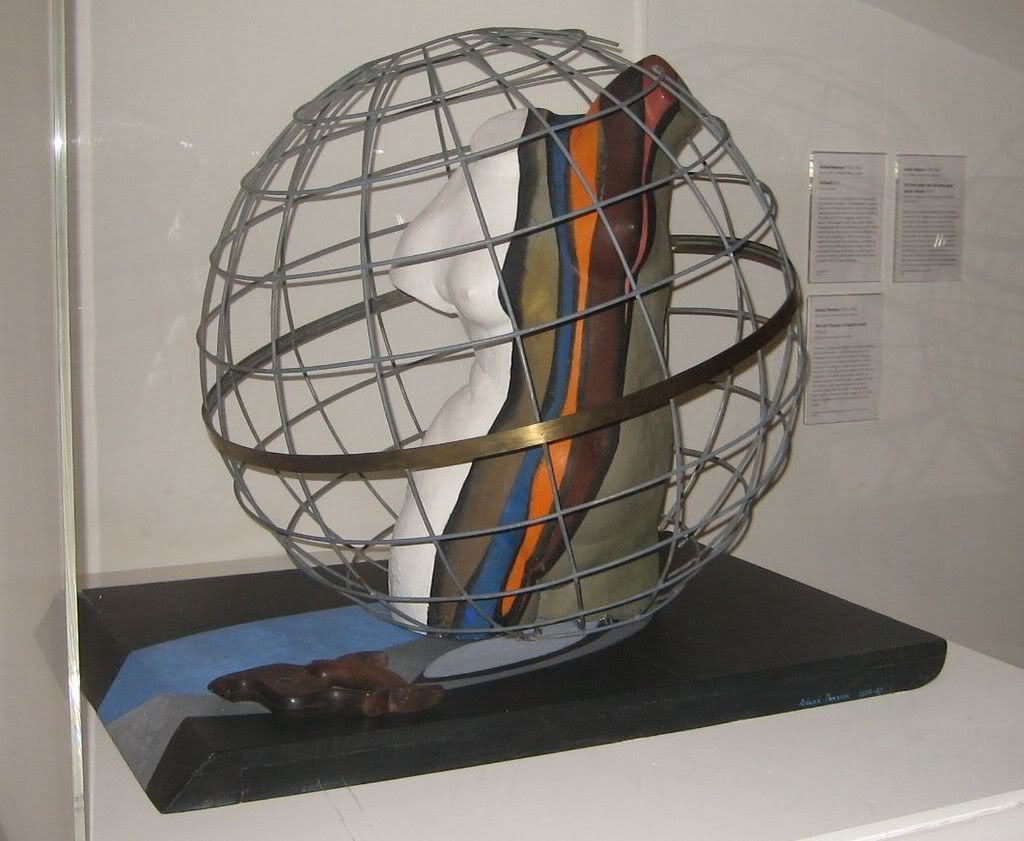
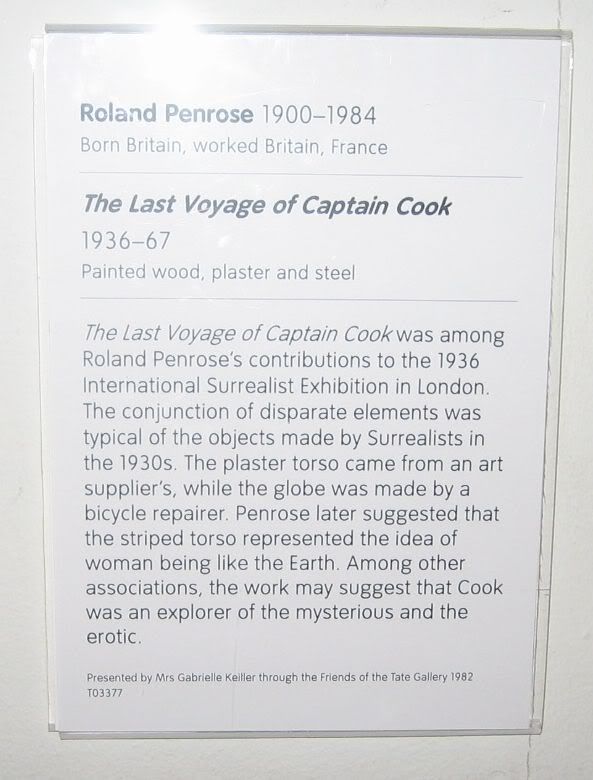
Ow, my brain.
Also:
Alis Dee has more about Frank Miller, with added BATMAN.
V, who has begun a blog about art, mental health and race, yey!!1, is telling us why to hate The Poisonwood Bible (which I've never read) and Lost In Translation (which I never liked and was just gagging for a good reason to hate).
And an invite to be a greenie leftie:
Campaign against Climate Change - "How can we win the race against climate catastrophe?"
A Public Meeting on Thursday November 8th, at 7.00pm
at the Friends Meeting House, Euston Road, London.
With George Monbiot, Author, Journalist and Campaigner
John Sauven, Director of Greenpeace UK
Claire Fauset, from the Camp for Climate Action
and Phil Thornhill, National Coordinator Campaign against Climate Change
This year the arctic ice cap shrunk to just 60% of its normal size (the average summer size for 1979-2000). We are seeing the first macro-impact of global warming. Some have speculated that only a small temperature increase (of a kind quite possible in the next ten years or so) could see the ice disappear completely and very rapidly. That would leave open sea which absorbs heat from the sun rather than reflect it back into the atmosphere as ice does. The warmed waters would then transmit heat to the land causing massive melting of permafrost, releasing huge quantities of CO2 and methane., triggering a massive warming event that would render much of the globe uninhabitable. This is just one of the terrifying “positive feedback” scenarios that have been suggested as a possible result of continuing to belch out greenhouse gases into the atmosphere the way we do now.
So what are we doing about it?
Changing the light bulbs. Buying cars that use slightly less petrol. At most, reducing emissions by a few percentage points a year. Do we have a plan even remotely radical enough to stand any real chance of heading off disaster ? Where are the politicians conveying the true urgency of the situation ? Where is the solemn prime ministerial broadcast explaining that the nation and the world is in grave peril and we need to take extreme action? What can we do in this situation to turn the politics around and get the scale and speed of action that we really need?
George Monbiot in his recent book “Heat” has offered a radical blueprint for survival. But recently he has said that even that does not go far enough.
Come to this Public Meeting to find out what he is saying now –what the Director of Britain’s best known environmental pressure group has to say about it, too, - and also the view from the activists who hit the headlines with their 'Climate Camp' at Heathrow, earlier this year.
The Moonbat is a decent speaker, so should be alright, for a laugh if nothing else. Friends House is right opposite Euston Station. I'll be there.
Saturday, October 20, 2007
1958
[NB: I originally wrote this to let of steam, but both this post and the FMT are now very slightly Internets Famous, and have thus been Criticised by Smart People. I'd therefore like to add C A Monteath-Carr's suggestion for an alternate FMT equation:
If (# of Female Prostitutes) > (# of All Other Women), then [WTF?]
I would like to propose a measure called The Frank Miller Test. It will test how much male sci-fi writers are obsessed with whores; if the proportion of female sex workers to neutrally presented female people in his story is above 1:1, he fails.
I said, alonglongtimeago, that I'd get back to the whole general mess of how sex work gets portrayed in sci-fi & fantasy. It's a happy coincidence for me that Yonmei recently wrote about this vile story CS Lewis penned in 1958 because if she hadn't, I would've had to search it out and reread it, ewwww. It's a short exploration concerning sex on an exploratory mission to Mars. 'Sex' meaning to Lewis exactly what it often means in sci-fi and in videogames - sex between the male adventurer and the female prostitute. Go read Yonmei's post, because I can't bear to rehash this vile example. Gist is, women can only come to Mars if they're going to be prostitutes. (The really cringlingly awful part is that when I first read it - I think I was 14 or 13 - I swallowed this shit whole.)
There's a lot of supposedly 'speculative' fictions where it's still 1958.
I am going to start with the ones I love the most, because they're the ones that hurt; China Mieville remains my writer of ultimate worship (and not just because of what he called Charles Clarke that one time on Lenin's Tomb), but there's this moment in The Scar where one of the minor characters, Carrianne, tells a story near-identical to that of Lewis's 'ministering angels'. Even on a first, frantic readthrough of a book I was badly in love with, this stood out as the weakest thing he'd ever put on paper.
Yeah. Great journeys are for penises, but vaginas can tag along and put out for us and that makes them winners! This isn't normative, I know, it's descriptive, he has an anthropology background, I shouldn't be so quick to smell a rat. And yet.
Carrianne is only one woman, but in male-authored sci-fi, the whole stupid prostitutes-only thing more often follows that 1958 pattern of the organised group. Iron Council is such a self-aware commentary on socialism, on industrial organisation, on the politics of objects (both technologies and bodies), on revolution, that I'm hesitant to rip at any one moment. It's a journey, a circle. The bit that involves prostitution is that wild present-tense 150-page book-within-book that some people hate and I hopelessly adore: Anamnesis ~ The Perpetual Train.
Mostly, it's about technological determinism with sociological determinisms piled atop that. (Beautifully. It's probably the best book in the entire world). A company sponsored by a wealthy coastal city-state is building a railway line across a continent, out from their city toward places they have never been. The Perpetual Train follows Judah, one of the Transcontinental Railway Trust's surveyors: he watches as the construction of the railway changes the land and the communities that it passes through.
It's 1958 again. The men have a quest, and the women are the questers' prostitutes. (Anonymous homosexual intercourse is suggested as the cash-free alternative). There's also, of course, this narrative about how 'vices' of all kinds are brought by the evil capitalist enterprise to the virgin wilderness -
- but not quite, I fucking adore this one:
Part of me adores that bolded line, and the energy of the passage in general. The other part is saying waitacottonpickingminute, you're appropriating vaginas to demonstrate your philosophy of technology? You're using the gender-neutral word 'worker' to mean 'man who pays for sex'? You're drawing lines between 'untamed' rural amazons and prostitutes who are Slaves Of The Patriarchal-Capital-Whatsit? Prostitutes who (as the story goes) 'corrupt' those women through violence, enforce their taboos and turn them, vampire-like, into prostitutes themselves? The shit?
There are only four sorts of women in The Perpetual Train: these village sluts, these whores, monsters and a few passing gamblers. The only ones that organise are, naturally, the whores.
Mieville is a materialist revolutionary - the (male) workers unionise, and the (female) sex workers unionise, not for ideology but because the TRT's wage money dries up; the two unions then unite and eventually do things their own way, a way in which no one is being paid for anything. So women get to stop being prostitutes AFTER THE REVOLUTION! and not before. That's all the women he's writing about, by the end of The Perpetual Train, excepting a few nameless Remade (class-critical monsters). It's not like this in The Scar: there, where a small group of women gather together, they're usually librarians.
[Addendum: I spoke to him about this after the Weird symposium - see here for his response to some of the points raised.]
I've done Firefly. The circumstances are murky, but the only reason Inara was able to be part of the quest while retaining her class privilege was because she was a sex worker.
I said I wouldn't do Frank Miller himself. It's the writers I love that I want to unpick. We're going to Discworld. We're going to the fandom-splitting nadir/zenith of Discworld, Night Watch. It has two things in common with The Perpetual Train; firstly it is a fold in time, set about thirty years before the rest of the series around it; secondly, all the women in that time-fold are prostitutes, excepting only two, who are both addressed as potential prostitutes. In the past, all women were bought and sold, geddit?
There are the prostitutes. There's the cat-owning figure at the back, Madame, and at one point a man asks if that's her title or her profession. There's the real seamstress, for Discworld regulars. I can't recall another woman in the entire thick of the book: Sybil and Angua creep in only at the temporally flat edges. I can't excerpt *listens to collective sighs of relief* because I can't find a copy anywhere (fact: he once posted my copy of Night Watch to Australia, but then gave me one of the other zillion we had sat about just-in-case), but I swear to god it's true. And again, as in The Perpetual Train, the unionising of the prostitutes is their key issue. It's an entirely realistic concern. And yet.
It's not like this is how he usually 'does' gender; Pratchett adores toying with female stereotypes, and has made us see eye to eye with the bitter one; fall in love with the fat, forty-year-old virgin; awaken the inner babysitter. He's franchised the Tooth Fairy. He's done an entire book about the orphaned servant-girl not getting married to the handsome prince. He's followed the queen from beehive to chessboard to mountaintop kingdom. Do not ask us about Mrs Cake.
Thing is, outside of the agency-worker Tooth Fairies, the only organised group of women...is that union, a guild no less, of prostitutes. There is this whole thing about how the witches do not have a hierarchy, or a leader, because Esme Weatherwax would never allow it; there is this other whole thing about how only three city guilds will even accept female members; the whores, the beggars, and the detested Night Watch (but only long after the revolution, even then). In other words, women do not form organised groups, but prostitutes do. And in Night Watch, the revolution demands 'reasonably priced love', because the only women the author has welcomed on board are whores.
[Here there could've been a word or two about how prostitution is brought into videogames, but it's just more of that cock-coddling I mentioned here, with the occasional added touch of slut-shaming or poor-little-victiming. I do think it makes me feel less comfortable presenting as a female PC in a gameworld, just because it makes it overtly clear that this invented society, otherwise little resembling our own, is programmed to cater specifically to the cock. Bioware has been known to proffer an occasional rentboy. It doesn't work, because I am not really a potential consumer of sex. It just looks like mapping male sexuality on to that afterthought that is the female PC, which is what it is.]
I'll say it again; when male sci-fi authors write about trade unions for sex workers, they do not do so out of the goodness of their bleeding liberal hearts. One fascinating thing about sex work that I would never have known without reading the words of sex workers themselves: the johns are sometimes organised. (The immensely readable PeridotAsh has written about this here and here). The sex industry impinges more on the average man's life than the average woman's - few women are potential customers or potential employees, while a sizeable minority of men are consumers of sex and all will find it marketed to them at some point. Is this why male sci-fi writers circle the topic like vultures, appropriate it and sometimes use it as their only discourse on women at all? By fantasising about organised sex workers, are they becoming an organised community of sex consumers? Are they already that, and just acting it out on paper?
Um, I think Mieville doesn't even like vagina, and I know Frank Miller has never spoken to a woman in his entire life. But hey.
[addendum: the angry black woman assures me that Mieville does like vagina. I am more than cool with that, because oh god would I ever hit it.]
Does this matter out in the real world? Only in that it makes it harder to hear real sex workers because of all the male-invented versions getting in the way, and putting fanrats like me off the topic entirely because I've seen how these guys use it.
If (# of Female Prostitutes) > (# of All Other Women), then [WTF?]
I would like to propose a measure called The Frank Miller Test. It will test how much male sci-fi writers are obsessed with whores; if the proportion of female sex workers to neutrally presented female people in his story is above 1:1, he fails.
I said, alonglongtimeago, that I'd get back to the whole general mess of how sex work gets portrayed in sci-fi & fantasy. It's a happy coincidence for me that Yonmei recently wrote about this vile story CS Lewis penned in 1958 because if she hadn't, I would've had to search it out and reread it, ewwww. It's a short exploration concerning sex on an exploratory mission to Mars. 'Sex' meaning to Lewis exactly what it often means in sci-fi and in videogames - sex between the male adventurer and the female prostitute. Go read Yonmei's post, because I can't bear to rehash this vile example. Gist is, women can only come to Mars if they're going to be prostitutes. (The really cringlingly awful part is that when I first read it - I think I was 14 or 13 - I swallowed this shit whole.)
There's a lot of supposedly 'speculative' fictions where it's still 1958.
I am going to start with the ones I love the most, because they're the ones that hurt; China Mieville remains my writer of ultimate worship (and not just because of what he called Charles Clarke that one time on Lenin's Tomb), but there's this moment in The Scar where one of the minor characters, Carrianne, tells a story near-identical to that of Lewis's 'ministering angels'. Even on a first, frantic readthrough of a book I was badly in love with, this stood out as the weakest thing he'd ever put on paper.
We were sailing our whim-trawler for Kohnid in Gnurr Kett. That's a long, hard journey. I was seventeen. I won the lottery to be figurehead and concubine. I spent the daylight strapped to the bowsprit, scattering orchid petals in front of the ship, spent the night reading the men's cards and in their beds. That was dull, but I enjoyed the days. Dangling there, singing, sleeping, watching the sea.
Yeah. Great journeys are for penises, but vaginas can tag along and put out for us and that makes them winners! This isn't normative, I know, it's descriptive, he has an anthropology background, I shouldn't be so quick to smell a rat. And yet.
Carrianne is only one woman, but in male-authored sci-fi, the whole stupid prostitutes-only thing more often follows that 1958 pattern of the organised group. Iron Council is such a self-aware commentary on socialism, on industrial organisation, on the politics of objects (both technologies and bodies), on revolution, that I'm hesitant to rip at any one moment. It's a journey, a circle. The bit that involves prostitution is that wild present-tense 150-page book-within-book that some people hate and I hopelessly adore: Anamnesis ~ The Perpetual Train.
Mostly, it's about technological determinism with sociological determinisms piled atop that. (Beautifully. It's probably the best book in the entire world). A company sponsored by a wealthy coastal city-state is building a railway line across a continent, out from their city toward places they have never been. The Perpetual Train follows Judah, one of the Transcontinental Railway Trust's surveyors: he watches as the construction of the railway changes the land and the communities that it passes through.
The villages they pass become rich and murderously violent - decadent, liquor-swilling, whore-filled and lawless - for the few days or weeks of the railroad, and then die. The towns live mayfly lives. Sex is as much part of the iron-road industry as spiking, grading, herding and paperwork. A tent city of prostitute refugees from New Crobuzon's red-light districts follows the rails and the men that set them down. The men call it Fucktown.
It's 1958 again. The men have a quest, and the women are the questers' prostitutes. (Anonymous homosexual intercourse is suggested as the cash-free alternative). There's also, of course, this narrative about how 'vices' of all kinds are brought by the evil capitalist enterprise to the virgin wilderness -
- but not quite, I fucking adore this one:
There are several like her, some boys but mostly young women, utterly charged by the arrival of these tough roustabouts and the breathing pistons of the trains. Their families lament while they let their flocks run, or sell them for meat to railroaders for scrimshawed trinkets from the tool-rooms. The goatkeep young men join the grading teams and fill the rivers. The young women find other outlets. [...] There is bad blood among the camp followers. The whores who have dutifully followed these men, splitting from the perpetual train to work with these mountain diggers, are affronted by their new rural rivals, these farmgirls who expect no pay. Some of the workers themselves are threatened by these newly voracious young women who do not sell sex or even give sex but take it. They know no rules. They have yet to learn taboos...
Part of me adores that bolded line, and the energy of the passage in general. The other part is saying waitacottonpickingminute, you're appropriating vaginas to demonstrate your philosophy of technology? You're using the gender-neutral word 'worker' to mean 'man who pays for sex'? You're drawing lines between 'untamed' rural amazons and prostitutes who are Slaves Of The Patriarchal-Capital-Whatsit? Prostitutes who (as the story goes) 'corrupt' those women through violence, enforce their taboos and turn them, vampire-like, into prostitutes themselves? The shit?
There are only four sorts of women in The Perpetual Train: these village sluts, these whores, monsters and a few passing gamblers. The only ones that organise are, naturally, the whores.
Mieville is a materialist revolutionary - the (male) workers unionise, and the (female) sex workers unionise, not for ideology but because the TRT's wage money dries up; the two unions then unite and eventually do things their own way, a way in which no one is being paid for anything. So women get to stop being prostitutes AFTER THE REVOLUTION! and not before. That's all the women he's writing about, by the end of The Perpetual Train, excepting a few nameless Remade (class-critical monsters). It's not like this in The Scar: there, where a small group of women gather together, they're usually librarians.
[Addendum: I spoke to him about this after the Weird symposium - see here for his response to some of the points raised.]
I've done Firefly. The circumstances are murky, but the only reason Inara was able to be part of the quest while retaining her class privilege was because she was a sex worker.
I said I wouldn't do Frank Miller himself. It's the writers I love that I want to unpick. We're going to Discworld. We're going to the fandom-splitting nadir/zenith of Discworld, Night Watch. It has two things in common with The Perpetual Train; firstly it is a fold in time, set about thirty years before the rest of the series around it; secondly, all the women in that time-fold are prostitutes, excepting only two, who are both addressed as potential prostitutes. In the past, all women were bought and sold, geddit?
There are the prostitutes. There's the cat-owning figure at the back, Madame, and at one point a man asks if that's her title or her profession. There's the real seamstress, for Discworld regulars. I can't recall another woman in the entire thick of the book: Sybil and Angua creep in only at the temporally flat edges. I can't excerpt *listens to collective sighs of relief* because I can't find a copy anywhere (fact: he once posted my copy of Night Watch to Australia, but then gave me one of the other zillion we had sat about just-in-case), but I swear to god it's true. And again, as in The Perpetual Train, the unionising of the prostitutes is their key issue. It's an entirely realistic concern. And yet.
It's not like this is how he usually 'does' gender; Pratchett adores toying with female stereotypes, and has made us see eye to eye with the bitter one; fall in love with the fat, forty-year-old virgin; awaken the inner babysitter. He's franchised the Tooth Fairy. He's done an entire book about the orphaned servant-girl not getting married to the handsome prince. He's followed the queen from beehive to chessboard to mountaintop kingdom. Do not ask us about Mrs Cake.
Thing is, outside of the agency-worker Tooth Fairies, the only organised group of women...is that union, a guild no less, of prostitutes. There is this whole thing about how the witches do not have a hierarchy, or a leader, because Esme Weatherwax would never allow it; there is this other whole thing about how only three city guilds will even accept female members; the whores, the beggars, and the detested Night Watch (but only long after the revolution, even then). In other words, women do not form organised groups, but prostitutes do. And in Night Watch, the revolution demands 'reasonably priced love', because the only women the author has welcomed on board are whores.
[Here there could've been a word or two about how prostitution is brought into videogames, but it's just more of that cock-coddling I mentioned here, with the occasional added touch of slut-shaming or poor-little-victiming. I do think it makes me feel less comfortable presenting as a female PC in a gameworld, just because it makes it overtly clear that this invented society, otherwise little resembling our own, is programmed to cater specifically to the cock. Bioware has been known to proffer an occasional rentboy. It doesn't work, because I am not really a potential consumer of sex. It just looks like mapping male sexuality on to that afterthought that is the female PC, which is what it is.]
I'll say it again; when male sci-fi authors write about trade unions for sex workers, they do not do so out of the goodness of their bleeding liberal hearts. One fascinating thing about sex work that I would never have known without reading the words of sex workers themselves: the johns are sometimes organised. (The immensely readable PeridotAsh has written about this here and here). The sex industry impinges more on the average man's life than the average woman's - few women are potential customers or potential employees, while a sizeable minority of men are consumers of sex and all will find it marketed to them at some point. Is this why male sci-fi writers circle the topic like vultures, appropriate it and sometimes use it as their only discourse on women at all? By fantasising about organised sex workers, are they becoming an organised community of sex consumers? Are they already that, and just acting it out on paper?
Um, I think Mieville doesn't even like vagina, and I know Frank Miller has never spoken to a woman in his entire life. But hey.
[addendum: the angry black woman assures me that Mieville does like vagina. I am more than cool with that, because oh god would I ever hit it.]
Does this matter out in the real world? Only in that it makes it harder to hear real sex workers because of all the male-invented versions getting in the way, and putting fanrats like me off the topic entirely because I've seen how these guys use it.
Thursday, October 18, 2007
always christmas and:
[in my next post, I will take the piss out of CS Lewis more directly, I promise.]
Alis Dee: breaking my heart and winning the internets.
A related aside; when replaying RPGs, it's really interesting to gen a character of the opposite gender to the one you took in your first trip. Firstly, I find it subtly changes the way you see social tone of the gameworld. (This is particularly so in BGII: Throne of Bhaal - standing there between Sarevok and Imoen, whether you're representing yourself as male or female does make a slight difference, if only in my head.) Secondly, it makes you aware of how the gameworld doles out [relentlessly heteronormative] sexual comfort to each gender. I usually, but not always, go with female characters on first playthroughs, and regularly wind up shocked when situations that were rendered neutrally in that first playthrough are directly, deliberately sexual when I'm playing a man.
I've just got done replaying Neverwinter Nights and it's pretty stunning how much cock-soothing there is thrown in there - everyone from both the two female henchmen to many minor NPCs to one of the major villains is at it. I'm fond enough of Aarin Gend, but after trying it in gamer drag, he feels like famine. Solanas was right; a female PC is asexual, desireless, but a female NPC is an object, a fucktoy. [We will forgive NWN, but only because of Valen. Valen!]
You can always reinterpret a book, but in videogames misogyny is hardwired, right there in the 1s and 0s. It's made invisible to female gamers except in the ultralight of drag. Weirder still is the experience of playing one of those games that were written before gender; I played a little of Final Fantasy I last year, and was confused at the excess of random lesbianism until I realised that the game was assuming that all my self-genned, neutrally presented characters were male.
Alis Dee: breaking my heart and winning the internets.
A related aside; when replaying RPGs, it's really interesting to gen a character of the opposite gender to the one you took in your first trip. Firstly, I find it subtly changes the way you see social tone of the gameworld. (This is particularly so in BGII: Throne of Bhaal - standing there between Sarevok and Imoen, whether you're representing yourself as male or female does make a slight difference, if only in my head.) Secondly, it makes you aware of how the gameworld doles out [relentlessly heteronormative] sexual comfort to each gender. I usually, but not always, go with female characters on first playthroughs, and regularly wind up shocked when situations that were rendered neutrally in that first playthrough are directly, deliberately sexual when I'm playing a man.
I've just got done replaying Neverwinter Nights and it's pretty stunning how much cock-soothing there is thrown in there - everyone from both the two female henchmen to many minor NPCs to one of the major villains is at it. I'm fond enough of Aarin Gend, but after trying it in gamer drag, he feels like famine. Solanas was right; a female PC is asexual, desireless, but a female NPC is an object, a fucktoy. [We will forgive NWN, but only because of Valen. Valen!]
You can always reinterpret a book, but in videogames misogyny is hardwired, right there in the 1s and 0s. It's made invisible to female gamers except in the ultralight of drag. Weirder still is the experience of playing one of those games that were written before gender; I played a little of Final Fantasy I last year, and was confused at the excess of random lesbianism until I realised that the game was assuming that all my self-genned, neutrally presented characters were male.
Tuesday, October 16, 2007
Human life isn't sacred.
Somebody had to say it.
I'm not speaking of religious tenets about the status of human life; what I'm talking about is policy. There are no leaders anywhere (well, except just maybe Bhutan) who put human life first when making the rules. Life wasn't sacred when we invaded Iraq. It wasn't sacred when we decided that it's worthwhile to have all these death machines on our streets, either - cars kill 67 people each week in the UK, and 825 each week in the USA. Life isn't sacred when we talk about climate change - zillions of reports on the human cost of the crisis resulted in mere hand-wringing, while the Stern report on the economic cost of inaction was what made climate change a political priority. When the hell do we ever talk about the importance of human life when we're deciding on policy?
Oh. Yeah. Here. (a link I totally stole from here). Why is that, I wonder?
Honestly, there's no need to invoke conspiracy theories there - it just looks like a vicious cycle of silence. Because human life is sacred, celebrating the economic and social boon of free, legal abortion is a supposedly icky thing to do. (All the while, we're meant to cheer on those lovely liberated Iraqi statue-squishers while a million of their compatriots lie dead at their feet. I'm just saying.) Maybe this silence stops people from seeing it in the same way they do road deaths. Or maybe it's because the benefits are bound to the 'ending' of life in a way that's more obvious than - no, no, wait, it's pretty bloody obvious in the case of that stupid war. Or maybe these losses are seen as preventable by other means - which often isn't true. (More to the point, why were you even driving that car? Why didn't you take the goddamn train?)
So as a political position, it's very hard to consistently defend the right-to-life. As a religious view, that's your call, but it's not mine - I don't think life is simply created and destroyed, I don't see human life as being intrinsically above other forms, and I think personhood is of far greater importance than life. (By 'personhood' I really mean presence in the world, physically, socially, intellectually and spiritually; being part of a great structure of things that touch you and relate to you. Everyone engages at their own level, but that of a 24-week fetus is negligible - certainly when compared to that of a newborn baby, in my totally uninformed and liberally-biased view.) Were I to become troubled about the needless killing of persons, abortion would be a long way down the agenda.
I'm not speaking of religious tenets about the status of human life; what I'm talking about is policy. There are no leaders anywhere (well, except just maybe Bhutan) who put human life first when making the rules. Life wasn't sacred when we invaded Iraq. It wasn't sacred when we decided that it's worthwhile to have all these death machines on our streets, either - cars kill 67 people each week in the UK, and 825 each week in the USA. Life isn't sacred when we talk about climate change - zillions of reports on the human cost of the crisis resulted in mere hand-wringing, while the Stern report on the economic cost of inaction was what made climate change a political priority. When the hell do we ever talk about the importance of human life when we're deciding on policy?
Oh. Yeah. Here. (a link I totally stole from here). Why is that, I wonder?
Honestly, there's no need to invoke conspiracy theories there - it just looks like a vicious cycle of silence. Because human life is sacred, celebrating the economic and social boon of free, legal abortion is a supposedly icky thing to do. (All the while, we're meant to cheer on those lovely liberated Iraqi statue-squishers while a million of their compatriots lie dead at their feet. I'm just saying.) Maybe this silence stops people from seeing it in the same way they do road deaths. Or maybe it's because the benefits are bound to the 'ending' of life in a way that's more obvious than - no, no, wait, it's pretty bloody obvious in the case of that stupid war. Or maybe these losses are seen as preventable by other means - which often isn't true. (More to the point, why were you even driving that car? Why didn't you take the goddamn train?)
So as a political position, it's very hard to consistently defend the right-to-life. As a religious view, that's your call, but it's not mine - I don't think life is simply created and destroyed, I don't see human life as being intrinsically above other forms, and I think personhood is of far greater importance than life. (By 'personhood' I really mean presence in the world, physically, socially, intellectually and spiritually; being part of a great structure of things that touch you and relate to you. Everyone engages at their own level, but that of a 24-week fetus is negligible - certainly when compared to that of a newborn baby, in my totally uninformed and liberally-biased view.) Were I to become troubled about the needless killing of persons, abortion would be a long way down the agenda.
Tuesday, October 09, 2007
Piffle About Gender Identity
I think I am in love with this blog. Mostly just for articulating this in a way I never could;
I've never lived in that sort of queer community (that most of my close friends are queer is more of a disparate, happy coincidence), but this applies well to many heterosexual situations I've seen, or been involved with. It also chimes with a phenomena I've nattered to Drew (Newfoundland separatist, PETA enemy and the nicest MRA in the whole wide world) about; the way young men are seen, and portrayed in the media, as being 'riskier', less stable, less adult, than young women. In some places - New York City and the UK as a whole are two - women in their 20s earn, on average, more than men of the same age. It doesn't outweigh the income plunge that begins in the 30s, but it's real. Another odd effect is that men who take arts degrees earn less than men who do not go to university at all. One could speculate that the man who goes to university for the same reasons many women go to university - transferable skills, learning for the sake of learning, a little freedom without too much responsibility - become that media stereotype of the wasted student who never gets up before noon. Meanwhile 20y/o men who are in a trade, or a career that doesn't require a degree, are considered to have passed The Great Masculinity Test and can be rewarded with man$s.
Marriage has a way of conferring adulthood on a man, and conferring responsibility for another life on a woman.
I have quoted SCUM on the subject of gender identity before now, on Deadjournal, but there is no harm in doing it again;
(It's worth mentioning that the manifesto also supports asexual supremacy; Solanas is pretty clear about the fact that she'd had relationships with men and with women before settling into asexuality.)
As I've said before, that passage isn't about gender, it's about privilege and power. Any person with agency will exhibit those 'female characteristics', and any person without will exhibit the 'male' ones. (Like being a player character in life rather than an NPC.) It's as if Solanas is describing the shock of seeing women sailing under their own steam. What does this have to do with 'Wendying'? Simply that asking someone to be your supportive, empathic Wendy is going to steal from their objectivity, integrity and assertiveness in relation to you, while all the while allowing you to be frivolous and weak (not that those are bad things) through them, without ever facing up to it yourself. Wendying is that public relations job Solanas is writing about.
Wendying is also my worst nightmare, biggest heterosexual headache, and a skill base I possess that I insist on using only on my own terms. I fail at queer identity, really I do; I look very femmy ('Earth mother' more than anything, much as I loathe the concept), but I'm far more drawn to butch ethics/dynamics, esp. in relation to other queer women. I'm that girl who'll stay awake while you nap, or offer you her shawl when you're cold, or listen without getting empathically sucked into your problems, or being responsible for them in any way. I bake a lot and repair or mod my own clothes; I also love videogames, repel wasp/spider incursions for my insect-phobic flatmates, hitch-hike, enthusiastically do basic electrical repairs, and loudly lambast the (many, many) people who address me as male on CiF. I tend to admire butch women and fancy femme ones (but not always). I should possibly make a post about how I [emotionally/spiritually] get off on being hospitable, and why, and why it may be extremely fucked up.
I also, as ever, have giant issues with the way my father Wendied (wendyed?) me when I was a teenager and will take a metaphorical knife to the metaphorical bollocks of anyone who tries to do the same, except that I can't, for I am butch and thus fundamentally bad & passive at negotiating with my own problems. Back to RadMasc;
-that [excepting the difficulties of visible queerness - I get the much more benign, but sometimes suffocating, difficulties of invisible biness instead] is the kind of ideal I have for the sort of lifestyle I'd like to lead. (I am made of fail, so atm not, but it's what I'm after and I'd be mildly surprised if I don't wind up there sooner rather than later).
One last thought; the other place I've encountered that 'butch woman', unable to reach out for help, but good at supporting others, emotional persona is in descriptions of the general behaviour pattern of the abuse survivor. I am reluctant when it comes to claiming that my teenage life involved emotional abuse, except that by most definitions it did. I like to think that I would've been like this anyway, but better at it.
A term coined by a good friend of mine is "Wendying", which is the process by which a masculine-identified person expects a femme (or a small group of femmes) to deal with hir problems and take care of hir without hir ever having to confront hir issues or actually acknowledge their roots. This ties in with the Peter Pan idea of not having to grow up, and the communal expectation that femmes will get masculine-identified people to settle down and become responsible adults. Which, of course, places the burden of encouraging adult behavior on femmes, assumes that all masculine-identified people are interested in femmes as partners, and that all femmes are interested in masculine-identified people as partners.
I've never lived in that sort of queer community (that most of my close friends are queer is more of a disparate, happy coincidence), but this applies well to many heterosexual situations I've seen, or been involved with. It also chimes with a phenomena I've nattered to Drew (Newfoundland separatist, PETA enemy and the nicest MRA in the whole wide world) about; the way young men are seen, and portrayed in the media, as being 'riskier', less stable, less adult, than young women. In some places - New York City and the UK as a whole are two - women in their 20s earn, on average, more than men of the same age. It doesn't outweigh the income plunge that begins in the 30s, but it's real. Another odd effect is that men who take arts degrees earn less than men who do not go to university at all. One could speculate that the man who goes to university for the same reasons many women go to university - transferable skills, learning for the sake of learning, a little freedom without too much responsibility - become that media stereotype of the wasted student who never gets up before noon. Meanwhile 20y/o men who are in a trade, or a career that doesn't require a degree, are considered to have passed The Great Masculinity Test and can be rewarded with man$s.
Marriage has a way of conferring adulthood on a man, and conferring responsibility for another life on a woman.
I have quoted SCUM on the subject of gender identity before now, on Deadjournal, but there is no harm in doing it again;
Being an incomplete female, the male spends his life attempting to complete himself, to become female. He attempts to do this by constantly seeking out, fraternizing with and trying to live through and fuse with the female, and by claiming as his own all female characteristics - emotional strength and independence, forcefulness, dynamism, decisiveness, coolness, objectivity, assertiveness, courage, integrity, vitality, intensity, depth of character, grooviness, etc. - and projecting onto women all male traits - vanity, frivolity, triviality, weakness, etc. It should be said though, that the male has one glaring area of superiority over the female - public relations. (He has done a brilliant job of convincing millions of women that men are women and women are men.)
(It's worth mentioning that the manifesto also supports asexual supremacy; Solanas is pretty clear about the fact that she'd had relationships with men and with women before settling into asexuality.)
As I've said before, that passage isn't about gender, it's about privilege and power. Any person with agency will exhibit those 'female characteristics', and any person without will exhibit the 'male' ones. (Like being a player character in life rather than an NPC.) It's as if Solanas is describing the shock of seeing women sailing under their own steam. What does this have to do with 'Wendying'? Simply that asking someone to be your supportive, empathic Wendy is going to steal from their objectivity, integrity and assertiveness in relation to you, while all the while allowing you to be frivolous and weak (not that those are bad things) through them, without ever facing up to it yourself. Wendying is that public relations job Solanas is writing about.
Wendying is also my worst nightmare, biggest heterosexual headache, and a skill base I possess that I insist on using only on my own terms. I fail at queer identity, really I do; I look very femmy ('Earth mother' more than anything, much as I loathe the concept), but I'm far more drawn to butch ethics/dynamics, esp. in relation to other queer women. I'm that girl who'll stay awake while you nap, or offer you her shawl when you're cold, or listen without getting empathically sucked into your problems, or being responsible for them in any way. I bake a lot and repair or mod my own clothes; I also love videogames, repel wasp/spider incursions for my insect-phobic flatmates, hitch-hike, enthusiastically do basic electrical repairs, and loudly lambast the (many, many) people who address me as male on CiF. I tend to admire butch women and fancy femme ones (but not always). I should possibly make a post about how I [emotionally/spiritually] get off on being hospitable, and why, and why it may be extremely fucked up.
I also, as ever, have giant issues with the way my father Wendied (wendyed?) me when I was a teenager and will take a metaphorical knife to the metaphorical bollocks of anyone who tries to do the same, except that I can't, for I am butch and thus fundamentally bad & passive at negotiating with my own problems. Back to RadMasc;
This idea that masculine folk take care of others to the exclusion of themselves goes far beyond sex. The stereotype is definitely of someone who does not openly express emotions, does not go to others for help with hir problems, and is protecting others to the exclusion of protecting hirself. In fact, the archetype of a butch is of someone who is a guardian of the community, has a job that enables hir to support others (despite the realities that many masculine butch and/or trans folk face intense job discrimination for being visibly queer and gender variant), shrugs off emotional and physical pain without complaining or asking for help, and in general giving constant support without ever needing any of hir own.
-that [excepting the difficulties of visible queerness - I get the much more benign, but sometimes suffocating, difficulties of invisible biness instead] is the kind of ideal I have for the sort of lifestyle I'd like to lead. (I am made of fail, so atm not, but it's what I'm after and I'd be mildly surprised if I don't wind up there sooner rather than later).
One last thought; the other place I've encountered that 'butch woman', unable to reach out for help, but good at supporting others, emotional persona is in descriptions of the general behaviour pattern of the abuse survivor. I am reluctant when it comes to claiming that my teenage life involved emotional abuse, except that by most definitions it did. I like to think that I would've been like this anyway, but better at it.
Wednesday, October 03, 2007
Micah Is My Hero/a roundup of curiosities.
I'm just keeping up with Heroes on BBC2 - ie, only halfway through season 1, not nearly far enough to do a complete Heroes/gender lambast, but I do want to say that oh dear god do I love Micah this evening. Because he won't let single-daddy off the hook. Micah is a small boy who used to live with single-mummy, Niki, and now lives with single-daddy, DL (which I am still disappointed is not spelt properly, ie Dalziel, but hey). Transcript stolen from Shadow Anthology:
DL: It's not my fault you can't keep track of your own stuff.
MICAH: Mom always put my lunch in my backpack every single morning.
DL: Well, I'm not your mom.
MICAH: Yeah, that's for sure.
DL: Micah, this isn't easy.
MICAH: Well, it wasn't easy for Mom either.
Next, some extremely old news I only just stumbled across; an FAC complaint about the practically Aristotelian approach the BBFC has toward the female body. (Text-only, but NSFW). Censorship; it means that if you want to know something about a woman's sex life, you have to ask the BBFC, because women aren't allowed to make films about how it really is. It's a familar story.
I keep meaning to say a few words about a completely different thing that also has to do with governments not giving a shit about women's experiences; Form DS-157 (link is an evil, vile PDF). It should be familiar to anyone who's ever applied for a US work visa. It's included in every batch of paperwork the embassies send out for such ends; it asks if you've ever been in a combat zone, and if you've ever been a victim of war. It asks if you have specialised training in the use of firearms or explosives. This form is given to all applicants, but completed versions are only accepted from men. While I'm aware this is all weed-out-the-terrorists stuff, it's beyond odd to be asked such questions then, twice now, told 'nope, don't give a shit, you're a chick'; I'd imagine it would be odder if I had any 'yes' answers to offer, as many female applicants must.
If you didn't read The Monkeysphere the first time around, the Wong has relaunched it elsewhere. I've not a fucking clue how well it fits with Proper Primatology, but it's a concept I sometimes like to bear in mind; I think it does seem helpful to assume that one can only really be aware of 150 other human souls. Sendalin (the imaginary enemy/shadow side whatsit) says one should keep it to 149 at most, so there's always a clear place in your awareness for that someone you might meet on the highroad. (Sendalin also says that being sensible about love is like being turquoise about puppies, and that he likes his coffee desperate with two spoons of melodrama, so how much stock to put in his ideas is up to you.)
My last-but-one post lied, btw; the green person has told me she reads Marie Claire sometimes! I FAIL .__. But I can still find it creepy & misogynistic that Mr Moran says it's 'reassuring' that Suu Kyi reads it, right?
And the only thing worth reading that has ever been printed about Madeline McCann, ever.
DL: It's not my fault you can't keep track of your own stuff.
MICAH: Mom always put my lunch in my backpack every single morning.
DL: Well, I'm not your mom.
MICAH: Yeah, that's for sure.
DL: Micah, this isn't easy.
MICAH: Well, it wasn't easy for Mom either.
Next, some extremely old news I only just stumbled across; an FAC complaint about the practically Aristotelian approach the BBFC has toward the female body. (Text-only, but NSFW). Censorship; it means that if you want to know something about a woman's sex life, you have to ask the BBFC, because women aren't allowed to make films about how it really is. It's a familar story.
I keep meaning to say a few words about a completely different thing that also has to do with governments not giving a shit about women's experiences; Form DS-157 (link is an evil, vile PDF). It should be familiar to anyone who's ever applied for a US work visa. It's included in every batch of paperwork the embassies send out for such ends; it asks if you've ever been in a combat zone, and if you've ever been a victim of war. It asks if you have specialised training in the use of firearms or explosives. This form is given to all applicants, but completed versions are only accepted from men. While I'm aware this is all weed-out-the-terrorists stuff, it's beyond odd to be asked such questions then, twice now, told 'nope, don't give a shit, you're a chick'; I'd imagine it would be odder if I had any 'yes' answers to offer, as many female applicants must.
If you didn't read The Monkeysphere the first time around, the Wong has relaunched it elsewhere. I've not a fucking clue how well it fits with Proper Primatology, but it's a concept I sometimes like to bear in mind; I think it does seem helpful to assume that one can only really be aware of 150 other human souls. Sendalin (the imaginary enemy/shadow side whatsit) says one should keep it to 149 at most, so there's always a clear place in your awareness for that someone you might meet on the highroad. (Sendalin also says that being sensible about love is like being turquoise about puppies, and that he likes his coffee desperate with two spoons of melodrama, so how much stock to put in his ideas is up to you.)
My last-but-one post lied, btw; the green person has told me she reads Marie Claire sometimes! I FAIL .__. But I can still find it creepy & misogynistic that Mr Moran says it's 'reassuring' that Suu Kyi reads it, right?
And the only thing worth reading that has ever been printed about Madeline McCann, ever.
Friday, September 28, 2007
telephone calls from on high/rangoonery.
I always answer the phone. It's usually either telemarketers, which she hates, or relatives, who aren't related to him (he's left for the frozen northern wastes now anyway), and some of whom stress her out, so I always try to get there first. I thought this was a telemarketer - there was that silence-then-fuzz thing, and I almost hung up halfway through the first sentence, but didn't. It was 'This is a recorded message from the Labour Party.'
Election on November 1st? You betcha. The message system (clearly I should write a ranty post about why the recorded voices are always women) asked who I was going to vote for in 'the next general election', no timeframe specified, (I pushed 4, 'don't know'), and then whether I'd ever voted Labour in the past (no). I'm now wondering if I should've lied to fuck the system, because it would be great fun if this exercise left them falsely confident and they wound up going to the country and hanging it, but hey.
A thing I should not have to rant about, but do; Aung San Suu Kyi/gender. This is not the 1950s and should not still be a fucking issue. I feel almost as if I am being petty about it but I am not; they are. After reading the abovelinked post, I then later caught this from the Beeb;
*looks around for something to bang head against* Well. Definitely not me who's obsessed with Suu Kyi's gender. Where to start? That it is reassuring that a female political figure reads Vogue and Marie Claire? That it is 'normal'? - I seriously, honest-to-god, haven't known any woman who reads that stuff since I was at sixth-form. This is not to say that it is a bad thing, only that that form of gender performance is a minority interest and it being seen as 'normal' and 'reassuring' says a lot more about the moran who wrote this shit than it does about Aung San Suu Kyi. The 'ohh-we-must-ponder-whether-she-is-tough-and-srs-because-she's-a-GIRL' stuff is piling moranity upon moranity.
A thing that made me laugh.
A thing that made me cry.
Might go into both of those more later, not sure. I have a new copy of Neuromancer so expect cracky rants about Gibson and the Virgin Mary soon. I could also whine about hating Microsoft (wtF @ everything about the new Hotmail), Yahoo (stupid fucks buy up Musicmatch then wreck it) and Google (why is Blogger talking to me only in Dutch? Or is 'Tastaturkürzel: drücken Sie Strg zusammen mit' German? Wtf is this setting and how do I change it?)
Election on November 1st? You betcha. The message system (clearly I should write a ranty post about why the recorded voices are always women) asked who I was going to vote for in 'the next general election', no timeframe specified, (I pushed 4, 'don't know'), and then whether I'd ever voted Labour in the past (no). I'm now wondering if I should've lied to fuck the system, because it would be great fun if this exercise left them falsely confident and they wound up going to the country and hanging it, but hey.
A thing I should not have to rant about, but do; Aung San Suu Kyi/gender. This is not the 1950s and should not still be a fucking issue. I feel almost as if I am being petty about it but I am not; they are. After reading the abovelinked post, I then later caught this from the Beeb;
"What can we bring Daw Aung?" we asked the contact who had set up the meeting in Rangoon. "Oh, she wants supplies and reading matter!" was the reply.
I had assumed she wanted the latest edition of the Amnesty International Almanac or perhaps Nelson Mandela's memoirs. Supplies, I assumed, meant batteries or light bulbs.
What she did in fact want were the last four editions of Vogue, perhaps a Marie Claire or two and a few jars of face cream. This was utterly reassuring.
Aung San Suu Kyi has an Oxford degree and was married to Michael, an Oxford academic and a leading authority on Buddhism.
She has given her life to her people and needs to prove to no-one the seriousness of her intent. But this woman, who also happens to be exceptionally beautiful, wanted to preserve a degree of normality and dignity under very abnormal circumstances.
We handed over the gifts, she prepared delicious curry for my cameraman and me, and then we conducted a tough interview about how she could actually run a country as ethnically divided and brutalised as Burma, if she ever got the chance. Her answers were humble but firm. There is steel behind the jasmine scent.
*looks around for something to bang head against* Well. Definitely not me who's obsessed with Suu Kyi's gender. Where to start? That it is reassuring that a female political figure reads Vogue and Marie Claire? That it is 'normal'? - I seriously, honest-to-god, haven't known any woman who reads that stuff since I was at sixth-form. This is not to say that it is a bad thing, only that that form of gender performance is a minority interest and it being seen as 'normal' and 'reassuring' says a lot more about the moran who wrote this shit than it does about Aung San Suu Kyi. The 'ohh-we-must-ponder-whether-she-is-tough-and-srs-because-she's-a-GIRL' stuff is piling moranity upon moranity.
A thing that made me laugh.
A thing that made me cry.
Might go into both of those more later, not sure. I have a new copy of Neuromancer so expect cracky rants about Gibson and the Virgin Mary soon. I could also whine about hating Microsoft (wtF @ everything about the new Hotmail), Yahoo (stupid fucks buy up Musicmatch then wreck it) and Google (why is Blogger talking to me only in Dutch? Or is 'Tastaturkürzel: drücken Sie Strg zusammen mit' German? Wtf is this setting and how do I change it?)
Wednesday, September 12, 2007
the eyes have it
It's annoying, having your favourite sexual organ constantly underrated.
I've been reading around the porn wars again (oh blah blah wank whatever wank about wanking blah) and it's irritating how often it comes back to the status of the female body. In particular there were two CiF pieces at the weekend about prostitution; you'd've read them a million times before, I'm sure, one idolising the Swedish model, one saying that it's not that simple. The comments return over and over to your-body-your-choice, to whether feminism is consistent, blahblahheck. It's not relevant. The meaning of a female body will never be relevant to women's sexual liberation, because I've got news for you; 98% of women fancy men (buried in a sidebar there).
Men. Male bodies. The ones with cocks, you know? Not that you can ever see that on TV, because male bodies are obscene and all. Looking at men is something 98% of women have in common - there's no feminist principle more unifying than this. Given that, feminist issues centre on female bodies strangely often.
So there's this Sheila Jeffreys idea that I just find plain ridiculous:
"A world without prostitution in any form, including pornography, for men might seem very threatening indeed because it removes the sexual prerogative of being able to degrade and use women irrespective of their personhood or pleasure. It means that men cannot access the sexual pleasures of women enslaved to their will by purchase. [...] In a world beyond prostitution women can relate to each other without the division created by the different, and conflicting uses to which men put them. Women will have the opportunity to unite to pursue goals which do not include sexual subordination, even for a fee."
Nope, sorry, not important to how women relate to each other, or to their goals. Because 98% of women fancy men. It's not, on the whole, relevant to them that a tiny proportion of other individual women are exchanging their bodies for the money of a larger-but-still-minority group of men. In a social responsibility sense we need to worry about trafficking and pimping, just as we need to worry about gun crime and the deaths of innocents in warfare - these things can be vital matters of conscience, things that have to be solved in order to make people feel comfortable with the world outside their homes, but they don't have to have personal impact. I don't believe the prostitution laws effect those 98% of women whose sexual interest lies, exclusively (82%), primarily (11%) or partially (5%), in the male body.
The Girl made an excellent post about how focusing on the male body makes women happy - and how the media, and the law, can conspire against our gaze. Many of the comments she received were along the lines of 'nonoez, objectification IS WRONG and if women do it that makes them JUST AS BAD AS MEN'. I'm of the opinion that yes, objectification is wrong, and what's wrong with it is that men are so inhospitable. They'll take it, but they won't dish it out. Really, why wrong? It's just looking. There are any number of ways to avoid being looked at, if you do find it upsetting - ways of dressing, of acting, of being present. It's just odd that so few women employ those ways, when almost all men do. You'd almost think they didn't want women to ogle them, as if being the object of our gaze was so terrifying it wouldn't be worth the extra sex they'd get out of it. There's reams of literature about men finding female sexuality scary - about terrible divinities like Aphrodite and Lilith. It's not the female body that's not wanted, is it? It's the eyes.
It's never happened, but I've always imagined that if a man asked me why I don't shave my legs, I'd say 'For the same reason you don't shave yours'. Because the way my legs look is irrelevant to my presence, to my sexuality - what matters is where my eyes rest.
And there are men responding to The Girl's Cif piece this morning saying 'women have sexual power, any woman can get sex whenever she wants!', still assuming that a woman is a body and a man is a pair of eyes. That's not sexual power. Sexual power is desiring and having those desires fulfilled; doesn't matter how easily you can get a man to fuck you if you fulfil his wants and he doesn't fulfil yours. But this is new, and women's bodies being on display is not new, so his visions are clearer than yours, and easier to live up to. And it bothers quite a lot of people that he can go out and buy what he wants; even if a woman can, even if she has the economic power to do so, few do, right? Because paying men to cater to your sexual desires is something only wild young women who've grown up in this evil, sex-saturated society do, right?
Bitchy Jones is ever-articulate on how men who pay find it hard to relate to women who do not pay. (I confess that I was looking for a different post of hers but I can't find it and that one does almost as well. She's also done something on how irritating endless sexual images of women can be to members of that 98%. Plus she is, on the whole, to blame for me latching on to this woman-body man-eyes thing.)
My eyes, incidentally, are (thanks to both Bitchy and to my sister) lately mad into Dieux du Stade. Have a good look at them, but I warn you, that fifth guy is so mine.
I've been reading around the porn wars again (oh blah blah wank whatever wank about wanking blah) and it's irritating how often it comes back to the status of the female body. In particular there were two CiF pieces at the weekend about prostitution; you'd've read them a million times before, I'm sure, one idolising the Swedish model, one saying that it's not that simple. The comments return over and over to your-body-your-choice, to whether feminism is consistent, blahblahheck. It's not relevant. The meaning of a female body will never be relevant to women's sexual liberation, because I've got news for you; 98% of women fancy men (buried in a sidebar there).
Men. Male bodies. The ones with cocks, you know? Not that you can ever see that on TV, because male bodies are obscene and all. Looking at men is something 98% of women have in common - there's no feminist principle more unifying than this. Given that, feminist issues centre on female bodies strangely often.
So there's this Sheila Jeffreys idea that I just find plain ridiculous:
"A world without prostitution in any form, including pornography, for men might seem very threatening indeed because it removes the sexual prerogative of being able to degrade and use women irrespective of their personhood or pleasure. It means that men cannot access the sexual pleasures of women enslaved to their will by purchase. [...] In a world beyond prostitution women can relate to each other without the division created by the different, and conflicting uses to which men put them. Women will have the opportunity to unite to pursue goals which do not include sexual subordination, even for a fee."
Nope, sorry, not important to how women relate to each other, or to their goals. Because 98% of women fancy men. It's not, on the whole, relevant to them that a tiny proportion of other individual women are exchanging their bodies for the money of a larger-but-still-minority group of men. In a social responsibility sense we need to worry about trafficking and pimping, just as we need to worry about gun crime and the deaths of innocents in warfare - these things can be vital matters of conscience, things that have to be solved in order to make people feel comfortable with the world outside their homes, but they don't have to have personal impact. I don't believe the prostitution laws effect those 98% of women whose sexual interest lies, exclusively (82%), primarily (11%) or partially (5%), in the male body.
The Girl made an excellent post about how focusing on the male body makes women happy - and how the media, and the law, can conspire against our gaze. Many of the comments she received were along the lines of 'nonoez, objectification IS WRONG and if women do it that makes them JUST AS BAD AS MEN'. I'm of the opinion that yes, objectification is wrong, and what's wrong with it is that men are so inhospitable. They'll take it, but they won't dish it out. Really, why wrong? It's just looking. There are any number of ways to avoid being looked at, if you do find it upsetting - ways of dressing, of acting, of being present. It's just odd that so few women employ those ways, when almost all men do. You'd almost think they didn't want women to ogle them, as if being the object of our gaze was so terrifying it wouldn't be worth the extra sex they'd get out of it. There's reams of literature about men finding female sexuality scary - about terrible divinities like Aphrodite and Lilith. It's not the female body that's not wanted, is it? It's the eyes.
It's never happened, but I've always imagined that if a man asked me why I don't shave my legs, I'd say 'For the same reason you don't shave yours'. Because the way my legs look is irrelevant to my presence, to my sexuality - what matters is where my eyes rest.
And there are men responding to The Girl's Cif piece this morning saying 'women have sexual power, any woman can get sex whenever she wants!', still assuming that a woman is a body and a man is a pair of eyes. That's not sexual power. Sexual power is desiring and having those desires fulfilled; doesn't matter how easily you can get a man to fuck you if you fulfil his wants and he doesn't fulfil yours. But this is new, and women's bodies being on display is not new, so his visions are clearer than yours, and easier to live up to. And it bothers quite a lot of people that he can go out and buy what he wants; even if a woman can, even if she has the economic power to do so, few do, right? Because paying men to cater to your sexual desires is something only wild young women who've grown up in this evil, sex-saturated society do, right?
Bitchy Jones is ever-articulate on how men who pay find it hard to relate to women who do not pay. (I confess that I was looking for a different post of hers but I can't find it and that one does almost as well. She's also done something on how irritating endless sexual images of women can be to members of that 98%. Plus she is, on the whole, to blame for me latching on to this woman-body man-eyes thing.)
My eyes, incidentally, are (thanks to both Bitchy and to my sister) lately mad into Dieux du Stade. Have a good look at them, but I warn you, that fifth guy is so mine.
Friday, September 07, 2007
terminology creep:
I have insomnia. If I didn't, I might not be bothering with this, but tea+biscuits+ranting on the internet is my way of dealing with 2.30am, and that pernicious terminology creep just sidled up over here.
I don't much like pointing out these things, because it makes me feel like I am being Issues, and I'd kinda like to be a brain and a voice and stuff rather than just a wangsty backstory. It's not just on the internet - I've been in this position at the London Socialist Feminists discussion group too. I either speak up and feel like a whiny little discussion-derailer or let it pass and have my head esplode of logic failure and unexpected invisibility. So please, say it with me:
single parents =/= single mothers.
All Bs are A, but not all As are B. You follow?
It is true that the vast majority (I've heard it quoted as 90%) of single parents are women. This is not a good reason to use the terms as if they were interchangeable. Firstly it renders single fathers and their children invisible and conceals the places where their needs differ from the needs of single mothers. Secondly, it's pure fucking misogyny. Yeah, it's just reflecting the misogyny that generally exists in family structures - the bulk of single parent families are formed from the breakdown of two-[heterosexual]-parent families, and of course mummy always has to keep the kids, because human beings are just designed that way, so calling single mother families 'single parent families' is just the natural way of things, m?
It's using a neutral word to cover up an un-neutral problem. It's saying that we don't have to question why mummy takes the kids. It cuts both ways; she has to have that parental responsibility, while he cannot have it. Or alternatively; she is permitted to hog that position, while he is permitted to neglect.
It disguises the differences between single mother families and single father families. I'm not made of bullshit statistics, but every single father family I've known of is the result of either bereavement or imprisonment; the absolute imperative for mummy to take the kids means that the place where daddy takes the kids is a pretty confined and inaccessible terrain. On the other hand there's this whole jumble of problems many single mother families experience - getting child support, coping with the emotional fallout of family breakdown, access (sometimes referred to as 'pay-per-view parenting', by which we mean 'pay-per-view paternity'), and dealing with the lousy stereotypes (foolish, pathetic welfare mum and incapable, irresponsible deadbeat dad. I don't know any single father family stereotypes. Maybe they wouldn't work so well on TV or something.) There's always going to be some overlaps and some reversals of the norm, but on the whole assuming that a single parent family is a single mother family means assuming that some problems are everyone's problems (and that my problems were/are not really there).
I'd like to live in a world where there were parents. It's a role I wouldn't run away screaming from myself. In that world the term 'single parent' would have substance. I just haven't personally experienced this world - I've seen only single mothers and single fathers, and conflating the gender roles that prescribe their fates into a nice, neutral term is not a great idea.
I don't much like pointing out these things, because it makes me feel like I am being Issues, and I'd kinda like to be a brain and a voice and stuff rather than just a wangsty backstory. It's not just on the internet - I've been in this position at the London Socialist Feminists discussion group too. I either speak up and feel like a whiny little discussion-derailer or let it pass and have my head esplode of logic failure and unexpected invisibility. So please, say it with me:
single parents =/= single mothers.
All Bs are A, but not all As are B. You follow?
It is true that the vast majority (I've heard it quoted as 90%) of single parents are women. This is not a good reason to use the terms as if they were interchangeable. Firstly it renders single fathers and their children invisible and conceals the places where their needs differ from the needs of single mothers. Secondly, it's pure fucking misogyny. Yeah, it's just reflecting the misogyny that generally exists in family structures - the bulk of single parent families are formed from the breakdown of two-[heterosexual]-parent families, and of course mummy always has to keep the kids, because human beings are just designed that way, so calling single mother families 'single parent families' is just the natural way of things, m?
It's using a neutral word to cover up an un-neutral problem. It's saying that we don't have to question why mummy takes the kids. It cuts both ways; she has to have that parental responsibility, while he cannot have it. Or alternatively; she is permitted to hog that position, while he is permitted to neglect.
It disguises the differences between single mother families and single father families. I'm not made of bullshit statistics, but every single father family I've known of is the result of either bereavement or imprisonment; the absolute imperative for mummy to take the kids means that the place where daddy takes the kids is a pretty confined and inaccessible terrain. On the other hand there's this whole jumble of problems many single mother families experience - getting child support, coping with the emotional fallout of family breakdown, access (sometimes referred to as 'pay-per-view parenting', by which we mean 'pay-per-view paternity'), and dealing with the lousy stereotypes (foolish, pathetic welfare mum and incapable, irresponsible deadbeat dad. I don't know any single father family stereotypes. Maybe they wouldn't work so well on TV or something.) There's always going to be some overlaps and some reversals of the norm, but on the whole assuming that a single parent family is a single mother family means assuming that some problems are everyone's problems (and that my problems were/are not really there).
I'd like to live in a world where there were parents. It's a role I wouldn't run away screaming from myself. In that world the term 'single parent' would have substance. I just haven't personally experienced this world - I've seen only single mothers and single fathers, and conflating the gender roles that prescribe their fates into a nice, neutral term is not a great idea.
Friday, July 20, 2007
I'll Be In My Bunk
[this is too long and I vaguely wish I could elllljaaaycut it here, but I dunno how, so whatever. tl;dr at will]
A lot of feminists like Joss Whedon. He's been honoured by Equality Now, which he calls his 'favourite charity'; he's spoken out against violence against women; and he really has done more to put women in the spotlight than any other male sci-fi filmmaker I could offhand name. He's a feminist in every way that matters. But I have this petty desire to explain where I feel his feminism is lacking. I don't think, in a storytelling sense, he's got his head around feminist sexuality.
Two initial caveats about this round of pettiness;
-I've not seen Buffy or anything else by him - this is going to be all about the Firefly.
-Yes, I'm going to spoiler stuff if I feel it will help me get my point across. OMR, for instance. If that bothers you, go watch it first and then come back to this. C'mon, it'll only take you twelve or so hours. Get going. Now.
-a brief note on names; while I think it's cute of Whedon to give one of his menfolk a generally female name (Jayne) and one of his womenfolk a generally male name (River), he still stuck fast to that quaint Anglo rule that, while men can roam about the alphabet as they please, all female names end in A, E, Y, I, N, L, H, R, S or T, with M and D as occasional bold outliers, or sometimes O or U in fantasy fiction. It does sound like a lot of letters, but common male names end just about anywhere except Q. Another respect in which he seems to be trying, but not hard enough for my tastes.
So let's take these women and their sexualities one at a time.
Zoe - the wife. Much of the criticism of female sexual stereotypes concerns the virgin/whore dichotomy; I feel that this analysis neglects a certain third category which happens to contain more women than either of the two aforementioned groups. Wives can fuck. They can have as much sex as they please, and can enjoy it as much as they like, so long as they do not stray from good, old-fashioned monogamy. Some people even think that wives are the only women who should be permitted to have sex for pleasure rather than for procreation.
Zoe is far more sexually assertive than any of the other female crewers - in fact, only one of the male cast (Jayne) has any edge over her in that regard. Her assertiveness isn't just about saying yes when she wants to say yes ("I need this man to tear all my clothes off."), but also about saying no when she wants to say no ("Remember that sex we were going to have, ever again?") When I was first whining about this whole Firefly-sex-is-crap thing to my darling Matthew, he pointed out that Zoe somewhat echoes the stereotype of the wife who uses sex to control her husband. (Furthermore - as far as I can recall - on every occasion in which they disagree the plot later proves Zoe to have been in the right.)
The lovely people at Feminist SF have hacked at another stereotype she embodies;
Zoe, as a kick-ass warrior woman, I adore. But I am not blind to the fact that a lot of white boys like to have a Black Warrior Woman in their work to demonstrate how cool they are with the race thing. The weird thing to me is that it’s so deeply problematic and emblematic of white boy issues, at the exact same time that it is hugely empowering and exciting. Typical of these difficult issues, maybe. Having a Black Warrior be a woman is less threatening to white people. Making the warrior woman Black further exoticizes her and taps into stereotypes of Blackness as wild, primitive, fierce, and stereotypes of Black women as butch. These are general issues with stereotyped exotic characters, and not necessarily appropriate to each instance of those characters, of course; Zoe is her own character, because Joss is actually really good with characterization in terms of personality (just not so much with figuring out characterization in terms of social aspects of race/class).
Her marriage does, for the most part, avoid traditional gender clichés; her husband, Wash (who is white), is a mild-mannered spaceship pilot whose physique and martial prowess is notably inferior to her; it's her who makes her way in the world with physical strength and he who gets by with cheerful chatter and 'nimble fingers'.
This is the bit where I ought to write something about War Stories but I don't know where to begin. It's a send-up of male jealousy, and of the idea that non-sexual bonding can't occur between a heterosexual woman and a male friend, but...it's like there's something getting at me about it that I can't even pin down. Maybe the simple fact that two men so intensely disputed the sexuality of a woman who didn't contribute a word - only actions - to their conversation. Maybe just because the plot allowed Wash to be a crazy jealous asshole who was trying to control his wife (sexually and in other ways) in the first place, even if he did get extreme comeuppance for it. Maybe it was the foul domesticity of the last few minutes - personal issues there I guess, but I found Wash's attitude in the 'wife soup' scene pretty disturbing and insulting. (See, personally I don't have much of a problem with keeping patriarchy out of the bedroom - it's the kitchen where I keep finding it crop up unexpectedly, hiding in the smelly crack behind the cooker. And I know it's not just me.) So if nothing else, War Stories portrays Zoe as a victim of misogyny in spite of her otherwise near-immunity to the most demeaning aspects of gender dynamics. It's not a comfy move - there's a bit of hopelessness about it. As there is to this whole general idea that the only woman who can have the sex she wants, when she wants it, is the wife.
Inara - the sex worker. Now here's a clusterfuck. Just as there's an abundance of variety among real-life sex workers, so there are in fantasy fiction. I've heard it said among geeks that Inara represents a challenge to the popular stereotype of prostitution; she's classy, educated, physically natural if overly adorned, comes from a higher social class than almost all of the other characters (and unlike the fugitives Simon and River she retains all the perks of her class status), and is one of only two outwardly religious major characters. She also has sex with both men and women, but I'll come back to that later. She's also part of a powerful organised group of prostitutes who all share these characteristics. (Organised groups of prostitutes are exceedingly common in male-authored fantasy; see Pratchett, Mieville, and ahahaha aahahaaa Frank Miller, among others. No offence to the sex workers, but I feel that these male fantasy writers are overdoing this, and not out of the goodness of their bleeding liberal hearts. But I will save Pratchett/gender & Mieville/gender for another day, and Miller/gender for the point-and-laughing it deserves. I'm working on Gibson/gender too, but my teenage brother stole my copy of Neuromancer, blah.)
My first problem with the praising of Inara is that people tend to assume Whedon made this situation up. I'd suggest that he didn't. She bears a remarkable resemblance to the historical shuyu - the high-status prostitutes of 19th-century Shanghai, who shared not only Inara's social status, silk outfits and provision of services that did not start or end simply with sex (Inara, like the shuyu, is in demand at social occasions as well as in the bedroom), but also minor details. Shuyu were examined every year (not for health reasons, as seems to be the case for Inara, but for their singing and storytelling skills); they also tended to live in small boats on the Huangpu River.
(I first read about this stuff in a book called Prostitution and Sexuality in Shanghai by Christian Henriot - I can't find anything snappy about the topic online, so I guess you'll just have to take my word for it.)
While there's nothing particularly wrong with being inspired by history, if Whedon really is writing about a futuristic shuya, he's taken out the genuinely ugly part of the shuyu culture and replaced it with more present concerns about sex work; firstly, that the prostitute's profession reduces her worth to her genitalia, in the eyes of her ever-misogynistic clients (see Shindig, also bits of Jaynestown). Whedon is clearly attempting to allay this concern. Secondly, that prostitutes lack sexual agency and can't have normal romantic/sexual relationships ("So what's the policy on dating?" "It's complicated.") - which Whedon explores in several ways, but ultimately doesn't debunk in the least. (Why does it have to be complicated? Do real sex workers find it complicated? From what I've read around the blogosphere, some do and some don't - those that do tending to be those who conceal their profession closely, which Inara does not.) Inara is the object of Mal's romantic desire, which she returns, but this leads only to angst and teariness rather than any actual cute scenes.
I'd like to wheel the bisexuality back in now; in War Stories, Inara entertains a powerful female politician. I'm going to quote here from the episode script, as hosted by FireflyWiki;
INT. INARA'S SHUTTLE - DAY
Inara massages oil onto the naked back of the Councilor, who's lying on her stomach on Inara's bed, eyes closed with pleasure. Filmy sheets cover what needs to be covered. Inara's in an off-the-shoulder silky dress, tied at the shoulder with a ribbon.
COUNCILOR
That feels amazing. Oh, right there.
Perfect.
(sighs)
I should've done this weeks ago.
INARA
(flirty)
I wouldn't have been here weeks ago.
COUNCILOR
And that would've been a shame.
INARA
For me as well... you have such
beautiful skin...
The Councilor turns on her side, looks at Inara.
COUNCILOR
There's no need for the show, Inara.
I just need to relax with someone
who's making no demands on me.
The Councilor starts to lay back down again. Inara stops her with a hand on her shoulder. The Councilor sits up, facing Inara, curious.
INARA
Most of my clientele is male, do you
know that?
COUNCILOR
No...
INARA
If I choose a woman, she tends to be
extraordinary in some way. And the
fact is, I occasionally have the
exact same need you do. One cannot
always be one's self in the company
of men.
COUNCILOR
Never, actually.
INARA
So no show. Let's just enjoy
ourselves.
While it never got to the screen, it's established fanon that there was originally intended to be a scene involving the Councillor's husband and family, so we can assume both these women are being portrayed as - in terms of behaviour if not identity - bisexual. Now. Apart from the general impression that this scene just exists to pander to the male audience, I have a huge problem with this portrayal of bisexual desire. See that word? Desire. These women are not talking about what they desire, what they lust for - they're talking about how wonderful it is to escape from teh evilz male gaze (by feeling each other up in front of a million zillion horny fanboys). They're talking about there being 'no demands' and 'being oneself'. Heaven forbid any woman would just want to fuck another woman because fucking women is good, hot fun. Of every Inara scene in the whole canon, it's here that I most keenly hear that Inara does not have any sexual, or romantic agency. She does not have sex out of a desire to have sex; it's a job, or a way to relax, or a semi-religious process. The only woman who gets to fuck for the sake of lust and enjoyment is the wife.
Kaylee - the girl next door. On the face of it, Kaylee looks like the most sexually assertive one of all. She pursues Simon while he remains very coy towards her. She waves Inara off by saying "Have good sex," which, as I've already demonstrated, is more consideration than Inara gives to the topic. She delivered that fanboy-slaying line "Goin' on a year now I ain't had nothin' twixt my nethers weren't run on batteries," which I think epitomises the Kaylee problem. She wants it. But she doesn't get it.
This really sticks out early on in Heart Of Gold; the crew are, for plot reasons, in a brothel, and Jayne and Kaylee are both enthusiastically eyeing up the prostitutes (mostly female, but some male). Jayne subsequently spends a lot of time with one of them. Does Kaylee? Hell no. In spite of her stated desire to have sex with a male prostitute, nothing of the sort is mentioned again.
So Jayne has casual, no-strings sex in Heart Of Gold, in Jaynestown, and he expresses a clear interest in the same in Our Mrs Reynolds. Kaylee never does. Unlike Jayne, Kaylee has a canonical romantic interest within the main cast; Simon, intelligent, bumbling, coy, shy, high-class, fugitive Simon, who has far more physical contact with his younger sister than he does with her. In spite of the lack of progress in their relationship, she only considers straying once, in The Message, and the plot makes sure that that's a bad idea. (Mal, by contrast, does sleep with someone else as well as attempting to romance Inara; of course that plot strand doesn't end well, but the fact remains that he did it and Kaylee didn't, in spite of Kaylee generally being more vocal about her sex drive than Mal is). In the entire canon, this vocally lustful woman has sex only twice; the second time is within a long-running, monogamous plotline. The first time is, hoorah, my least favourite Kaylee script extract, from Out Of Gas. It's a flashback scene that shows us how Kaylee got her job on Serenity;
INT. SERENITY - ENGINE ROOM
--Mal's looking for his mechanic (the handsome mechanic we saw earlier.)
MAL
What's this I been hearin' 'bout
yet another delay?
As Mal moves closer to the engine room, we can make out BESTER'S ARMY BOOTS sticking out from under the engine. Presumably doing his grease monkey thing.
MAL
You were supposed to have that engine
fixed and us up and...
(as he sees:)
What in the name of < all that's proper..? >
[suo-yo duh doh shr-dang]
Bester's shorts are... well, down around his army boots. He's having the sex with an unseen FEMALE. There is energetic humpage. Mal's a bit scandalized. Casts his glance away from the action. Might clear his throat.
MAL
Bester.
Much with the dirty humping. Mal gives it a beat.
MAL
Bester.
They seem to be, uh, finishing.
MAL
BESTER!
Bester climbs out, mostly still naked, yanking up his shorts.
BESTER
What?
Bester just looks to Mal. Innocently inquisitive. There is some dead pan staring on Mal's part. Oh, yes there is. Then:
MAL
You do realize we been parked on this
rock near a week longer'n we planned?
BESTER
Yeah, but... there's stuff to do.
MAL
As for example that job we got waitin'
for us on Paquin. When we landed here you
said you just needed a few days before we were
space worthy again and is there somethin' wrong
with your bunk?
BESTER
What?
More impatient staring, then Bester gets it finally: right. The naked girl behind the engine. Bester laughs.
BESTER
Oh! No. Cap!
(leans forward "confidentially")
She like engines. They make her hot.
MAL
Bester. Get your prairie harpy off my
boat and put us back in the air.
BESTER
'kay. But... can't.
MAL
Whaddya mean "can't."
BESTER
No can do, cap. Secondary grav boot's shot.
KAYLEE (O.S.)
No it ain't.
Kaylee pops up, getting dressed. The men look at her.
KAYLEE
Ain't nothing wrong with your grav boot.
Grav boot's just fine.
(to Mal)
Hello.
She drops down again, out of view. Mal glances at Bester. Bester's a bit flustered.
BESTER
(to Mal)
She don't... that's not...
(to Kaylee)
No it ain't!
KAYLEE
(reappearing)
Sure it is. Grav boot ain't your trouble.
I seen the trouble plain as day when I's down
there on my back. Your reg couple's bad.
BESTER
(clueless)
The... the what?
KAYLEE
Reg couple. Right here. See?
BESTER
No.
KAYLEE
This.
(Bester is still of the blank expression)
I'm pointin' right at it.
She rolls her eyes, sighs, reaches in, breaks off a part of the engine.
BESTER
Hey!
KAYLEE
Here.
She plunks the part in Bester's hand. She reaches back in, tinkers.
KAYLEE
Don't really serve much of a purpose, anyway.
Just tends to gum up the works when it gets tacked.
(re: a nearby wrench)
Hand me that, will ya?
(he does)
So I figure, why even have it? Better to just plug
your g-line straight into the port-pin-lock and that
should...
She's done. WHIRRR the turbine starts to turn.
KAYLEE
There.
She shoves it in Bester's hand. Fiddles with the engine.
BESTER
What'd you do?
MAL
She fixed it.
KAYLEE
Well, it wasn't really broke.
Bester looks at the part in his hand.
MAL
Where'd you learn to do that, miss?
KAYLEE
(shrugs)
Just do it, that's all. My daddy says I got
a natural talent.
MAL
I'd say you do at that.
BESTER
(re: the part)
We don't need this?
KAYLEE
Not 'specially.
MAL
You work for your daddy, do you?
KAYLEE
When he's got work. Which lately ain't
been too often.
MAL
And have you had much experience on a
vessel like this?
KAYLEE
Never even been up in one before.
MAL
You never been... how'd you like to?
KAYLEE
(points skyward)
You mean...?
MAL
Sure.
KAYLEE
For how long?
MAL
Long as you like. Long as you can keep
her in the sky.
KAYLEE
(getting it now)
You offering me a job?
BESTER
What?
MAL
Believe I just did.
KAYLEE
Just gotta ask my folks!
She pulls her hastily assembled wardrobe about her, pushes past Mal and a stunned Bester.
KAYLEE
Don't leave without me!
Mal watches Kaylee go, tickled. Bester just blinks, stunned.
BESTER
Mal. Whaddya need two mechanics for?
MAL
I really don't. Pack your things.
(then)
She got a name?
Oh dear god, where to start? Kaylee is indeed having pretty casual sex, even apparently exhibiting a fetish, but it's not about the sex. "I seen the trouble plain as day when I's down there on my back." - she wasn't thinking about the sex while she was having sex, she was considering how to use her professional skills. Perhaps Whedon was trying to imply that Bester isn't sexually competent, but what he's given us is a girl who lies back and thinks of...Serenity. It's not the guy she's into, it's the landscape. Considering what a great career move this encounter was for her, you could even tag her to the 'office slut' stereotype - the girl who fucks for a promotion rather than for pleasure. For all she talks about simple sexual enjoyment, Kaylee never actually gets it.
River - the witch-child. She's lovely. She's the second character, after Inara, to be shown naked. But sexually, River doesn't do a lot, either for herself or anyone else. She has a mental disability caused by damage to the brain, and everyone knows that people with mental disabilities aren't sexual, or sexy. They can have relatives and make friends and do srs MacGuffin plot stuff, be intelligent, be dangerous, be artistic, but no sex pls. (The only other celibate main character, Book, is a priest. Jayne queries his celibacy in a bout of smalltalk at the start of the last episode, and he said he'd deliberately chosen to join an order that did not allow priests to marry. I don't know how much I can, or should, read into this difference between the only celibate woman and the only celibate man.)
I think I should leave that right there - River doesn't add anything more to the topic of this rant, namely sex, though she is worthy of many other gender-rants in her own right.
Saffron - the temptress. Not a crewer, but a recurring villain, and how did that happen? Sex, sort of. She's another on the long list of Characters That Appear Naked, in this case in the process of pretending she wanted to have sex with Mal, not having sex with Mal, pretending she wanted to have sex with Wash, then leading the poor heroes into an awful trap before running away, oh noez! But no one can bear to kill her, so she comes back later, with more naughty lies and vile scheming. The point here is that her sexuality, which she usually puts over as being a very earthy, natural thing (she's generally simply dressed and not made up, is pleasantly ample-bodied, more so than Inara and maybe a little more so than Kaylee, I'm not certain) - is a lie. She implies - "You're assuming the payoff is the point" - that she gets off on the sexual deceptions she employs, one way or another. She appears in only two episodes, and heavily comes on to five characters, all of them in deceptive situations; she is known by three different names, none of which is really hers; she has had many brief marriages.
In a way, she resembles Kaylee - making clear sexual overtures but with no follow-up. In Saffron's case, the lack of action is clearly intentional. Now, you could see this as a ratings issue - if Saffron was doing all the stuff she appears to want to do, the story would be a mite less primetime - it would also have a very different chemistry, as teasing the characters romantically but not delivering until very late on in the story, or not at all, is part of the allure. There are reasonable not-specifically-gender-related reasons for Saffron to be the sweet cocktease she is. But next to Kaylee and Inara, seeing another woman who doesn't really act on her sexual desire is a tad suspicious. She'll talk of it, maybe do it offscreen a time or two, but it's not about wanting sex, it's really all for the sake of something else. And it's not that way for Jayne, or for Mal, or for the married couple.
So, conclusion; Firefly women do sex if they're married, or sex if they have some non-sex goal in mind, or sex if one of the male leads wants to fuck them and we're not even going to remember the girl's name after the end of the episode. (Honourable exception for Nandi, who goes in category 2 rather than category 3). This is feminism in sci-fi. Enjoy it.
A lot of feminists like Joss Whedon. He's been honoured by Equality Now, which he calls his 'favourite charity'; he's spoken out against violence against women; and he really has done more to put women in the spotlight than any other male sci-fi filmmaker I could offhand name. He's a feminist in every way that matters. But I have this petty desire to explain where I feel his feminism is lacking. I don't think, in a storytelling sense, he's got his head around feminist sexuality.
Two initial caveats about this round of pettiness;
-I've not seen Buffy or anything else by him - this is going to be all about the Firefly.
-Yes, I'm going to spoiler stuff if I feel it will help me get my point across. OMR, for instance. If that bothers you, go watch it first and then come back to this. C'mon, it'll only take you twelve or so hours. Get going. Now.
-a brief note on names; while I think it's cute of Whedon to give one of his menfolk a generally female name (Jayne) and one of his womenfolk a generally male name (River), he still stuck fast to that quaint Anglo rule that, while men can roam about the alphabet as they please, all female names end in A, E, Y, I, N, L, H, R, S or T, with M and D as occasional bold outliers, or sometimes O or U in fantasy fiction. It does sound like a lot of letters, but common male names end just about anywhere except Q. Another respect in which he seems to be trying, but not hard enough for my tastes.
So let's take these women and their sexualities one at a time.
Zoe - the wife. Much of the criticism of female sexual stereotypes concerns the virgin/whore dichotomy; I feel that this analysis neglects a certain third category which happens to contain more women than either of the two aforementioned groups. Wives can fuck. They can have as much sex as they please, and can enjoy it as much as they like, so long as they do not stray from good, old-fashioned monogamy. Some people even think that wives are the only women who should be permitted to have sex for pleasure rather than for procreation.
Zoe is far more sexually assertive than any of the other female crewers - in fact, only one of the male cast (Jayne) has any edge over her in that regard. Her assertiveness isn't just about saying yes when she wants to say yes ("I need this man to tear all my clothes off."), but also about saying no when she wants to say no ("Remember that sex we were going to have, ever again?") When I was first whining about this whole Firefly-sex-is-crap thing to my darling Matthew, he pointed out that Zoe somewhat echoes the stereotype of the wife who uses sex to control her husband. (Furthermore - as far as I can recall - on every occasion in which they disagree the plot later proves Zoe to have been in the right.)
The lovely people at Feminist SF have hacked at another stereotype she embodies;
Zoe, as a kick-ass warrior woman, I adore. But I am not blind to the fact that a lot of white boys like to have a Black Warrior Woman in their work to demonstrate how cool they are with the race thing. The weird thing to me is that it’s so deeply problematic and emblematic of white boy issues, at the exact same time that it is hugely empowering and exciting. Typical of these difficult issues, maybe. Having a Black Warrior be a woman is less threatening to white people. Making the warrior woman Black further exoticizes her and taps into stereotypes of Blackness as wild, primitive, fierce, and stereotypes of Black women as butch. These are general issues with stereotyped exotic characters, and not necessarily appropriate to each instance of those characters, of course; Zoe is her own character, because Joss is actually really good with characterization in terms of personality (just not so much with figuring out characterization in terms of social aspects of race/class).
Her marriage does, for the most part, avoid traditional gender clichés; her husband, Wash (who is white), is a mild-mannered spaceship pilot whose physique and martial prowess is notably inferior to her; it's her who makes her way in the world with physical strength and he who gets by with cheerful chatter and 'nimble fingers'.
This is the bit where I ought to write something about War Stories but I don't know where to begin. It's a send-up of male jealousy, and of the idea that non-sexual bonding can't occur between a heterosexual woman and a male friend, but...it's like there's something getting at me about it that I can't even pin down. Maybe the simple fact that two men so intensely disputed the sexuality of a woman who didn't contribute a word - only actions - to their conversation. Maybe just because the plot allowed Wash to be a crazy jealous asshole who was trying to control his wife (sexually and in other ways) in the first place, even if he did get extreme comeuppance for it. Maybe it was the foul domesticity of the last few minutes - personal issues there I guess, but I found Wash's attitude in the 'wife soup' scene pretty disturbing and insulting. (See, personally I don't have much of a problem with keeping patriarchy out of the bedroom - it's the kitchen where I keep finding it crop up unexpectedly, hiding in the smelly crack behind the cooker. And I know it's not just me.) So if nothing else, War Stories portrays Zoe as a victim of misogyny in spite of her otherwise near-immunity to the most demeaning aspects of gender dynamics. It's not a comfy move - there's a bit of hopelessness about it. As there is to this whole general idea that the only woman who can have the sex she wants, when she wants it, is the wife.
Inara - the sex worker. Now here's a clusterfuck. Just as there's an abundance of variety among real-life sex workers, so there are in fantasy fiction. I've heard it said among geeks that Inara represents a challenge to the popular stereotype of prostitution; she's classy, educated, physically natural if overly adorned, comes from a higher social class than almost all of the other characters (and unlike the fugitives Simon and River she retains all the perks of her class status), and is one of only two outwardly religious major characters. She also has sex with both men and women, but I'll come back to that later. She's also part of a powerful organised group of prostitutes who all share these characteristics. (Organised groups of prostitutes are exceedingly common in male-authored fantasy; see Pratchett, Mieville, and ahahaha aahahaaa Frank Miller, among others. No offence to the sex workers, but I feel that these male fantasy writers are overdoing this, and not out of the goodness of their bleeding liberal hearts. But I will save Pratchett/gender & Mieville/gender for another day, and Miller/gender for the point-and-laughing it deserves. I'm working on Gibson/gender too, but my teenage brother stole my copy of Neuromancer, blah.)
My first problem with the praising of Inara is that people tend to assume Whedon made this situation up. I'd suggest that he didn't. She bears a remarkable resemblance to the historical shuyu - the high-status prostitutes of 19th-century Shanghai, who shared not only Inara's social status, silk outfits and provision of services that did not start or end simply with sex (Inara, like the shuyu, is in demand at social occasions as well as in the bedroom), but also minor details. Shuyu were examined every year (not for health reasons, as seems to be the case for Inara, but for their singing and storytelling skills); they also tended to live in small boats on the Huangpu River.
(I first read about this stuff in a book called Prostitution and Sexuality in Shanghai by Christian Henriot - I can't find anything snappy about the topic online, so I guess you'll just have to take my word for it.)
While there's nothing particularly wrong with being inspired by history, if Whedon really is writing about a futuristic shuya, he's taken out the genuinely ugly part of the shuyu culture and replaced it with more present concerns about sex work; firstly, that the prostitute's profession reduces her worth to her genitalia, in the eyes of her ever-misogynistic clients (see Shindig, also bits of Jaynestown). Whedon is clearly attempting to allay this concern. Secondly, that prostitutes lack sexual agency and can't have normal romantic/sexual relationships ("So what's the policy on dating?" "It's complicated.") - which Whedon explores in several ways, but ultimately doesn't debunk in the least. (Why does it have to be complicated? Do real sex workers find it complicated? From what I've read around the blogosphere, some do and some don't - those that do tending to be those who conceal their profession closely, which Inara does not.) Inara is the object of Mal's romantic desire, which she returns, but this leads only to angst and teariness rather than any actual cute scenes.
I'd like to wheel the bisexuality back in now; in War Stories, Inara entertains a powerful female politician. I'm going to quote here from the episode script, as hosted by FireflyWiki;
INT. INARA'S SHUTTLE - DAY
Inara massages oil onto the naked back of the Councilor, who's lying on her stomach on Inara's bed, eyes closed with pleasure. Filmy sheets cover what needs to be covered. Inara's in an off-the-shoulder silky dress, tied at the shoulder with a ribbon.
COUNCILOR
That feels amazing. Oh, right there.
Perfect.
(sighs)
I should've done this weeks ago.
INARA
(flirty)
I wouldn't have been here weeks ago.
COUNCILOR
And that would've been a shame.
INARA
For me as well... you have such
beautiful skin...
The Councilor turns on her side, looks at Inara.
COUNCILOR
There's no need for the show, Inara.
I just need to relax with someone
who's making no demands on me.
The Councilor starts to lay back down again. Inara stops her with a hand on her shoulder. The Councilor sits up, facing Inara, curious.
INARA
Most of my clientele is male, do you
know that?
COUNCILOR
No...
INARA
If I choose a woman, she tends to be
extraordinary in some way. And the
fact is, I occasionally have the
exact same need you do. One cannot
always be one's self in the company
of men.
COUNCILOR
Never, actually.
INARA
So no show. Let's just enjoy
ourselves.
While it never got to the screen, it's established fanon that there was originally intended to be a scene involving the Councillor's husband and family, so we can assume both these women are being portrayed as - in terms of behaviour if not identity - bisexual. Now. Apart from the general impression that this scene just exists to pander to the male audience, I have a huge problem with this portrayal of bisexual desire. See that word? Desire. These women are not talking about what they desire, what they lust for - they're talking about how wonderful it is to escape from teh evilz male gaze (by feeling each other up in front of a million zillion horny fanboys). They're talking about there being 'no demands' and 'being oneself'. Heaven forbid any woman would just want to fuck another woman because fucking women is good, hot fun. Of every Inara scene in the whole canon, it's here that I most keenly hear that Inara does not have any sexual, or romantic agency. She does not have sex out of a desire to have sex; it's a job, or a way to relax, or a semi-religious process. The only woman who gets to fuck for the sake of lust and enjoyment is the wife.
Kaylee - the girl next door. On the face of it, Kaylee looks like the most sexually assertive one of all. She pursues Simon while he remains very coy towards her. She waves Inara off by saying "Have good sex," which, as I've already demonstrated, is more consideration than Inara gives to the topic. She delivered that fanboy-slaying line "Goin' on a year now I ain't had nothin' twixt my nethers weren't run on batteries," which I think epitomises the Kaylee problem. She wants it. But she doesn't get it.
This really sticks out early on in Heart Of Gold; the crew are, for plot reasons, in a brothel, and Jayne and Kaylee are both enthusiastically eyeing up the prostitutes (mostly female, but some male). Jayne subsequently spends a lot of time with one of them. Does Kaylee? Hell no. In spite of her stated desire to have sex with a male prostitute, nothing of the sort is mentioned again.
So Jayne has casual, no-strings sex in Heart Of Gold, in Jaynestown, and he expresses a clear interest in the same in Our Mrs Reynolds. Kaylee never does. Unlike Jayne, Kaylee has a canonical romantic interest within the main cast; Simon, intelligent, bumbling, coy, shy, high-class, fugitive Simon, who has far more physical contact with his younger sister than he does with her. In spite of the lack of progress in their relationship, she only considers straying once, in The Message, and the plot makes sure that that's a bad idea. (Mal, by contrast, does sleep with someone else as well as attempting to romance Inara; of course that plot strand doesn't end well, but the fact remains that he did it and Kaylee didn't, in spite of Kaylee generally being more vocal about her sex drive than Mal is). In the entire canon, this vocally lustful woman has sex only twice; the second time is within a long-running, monogamous plotline. The first time is, hoorah, my least favourite Kaylee script extract, from Out Of Gas. It's a flashback scene that shows us how Kaylee got her job on Serenity;
INT. SERENITY - ENGINE ROOM
--Mal's looking for his mechanic (the handsome mechanic we saw earlier.)
MAL
What's this I been hearin' 'bout
yet another delay?
As Mal moves closer to the engine room, we can make out BESTER'S ARMY BOOTS sticking out from under the engine. Presumably doing his grease monkey thing.
MAL
You were supposed to have that engine
fixed and us up and...
(as he sees:)
What in the name of < all that's proper..? >
[suo-yo duh doh shr-dang]
Bester's shorts are... well, down around his army boots. He's having the sex with an unseen FEMALE. There is energetic humpage. Mal's a bit scandalized. Casts his glance away from the action. Might clear his throat.
MAL
Bester.
Much with the dirty humping. Mal gives it a beat.
MAL
Bester.
They seem to be, uh, finishing.
MAL
BESTER!
Bester climbs out, mostly still naked, yanking up his shorts.
BESTER
What?
Bester just looks to Mal. Innocently inquisitive. There is some dead pan staring on Mal's part. Oh, yes there is. Then:
MAL
You do realize we been parked on this
rock near a week longer'n we planned?
BESTER
Yeah, but... there's stuff to do.
MAL
As for example that job we got waitin'
for us on Paquin. When we landed here you
said you just needed a few days before we were
space worthy again and is there somethin' wrong
with your bunk?
BESTER
What?
More impatient staring, then Bester gets it finally: right. The naked girl behind the engine. Bester laughs.
BESTER
Oh! No. Cap!
(leans forward "confidentially")
She like engines. They make her hot.
MAL
Bester. Get your prairie harpy off my
boat and put us back in the air.
BESTER
'kay. But... can't.
MAL
Whaddya mean "can't."
BESTER
No can do, cap. Secondary grav boot's shot.
KAYLEE (O.S.)
No it ain't.
Kaylee pops up, getting dressed. The men look at her.
KAYLEE
Ain't nothing wrong with your grav boot.
Grav boot's just fine.
(to Mal)
Hello.
She drops down again, out of view. Mal glances at Bester. Bester's a bit flustered.
BESTER
(to Mal)
She don't... that's not...
(to Kaylee)
No it ain't!
KAYLEE
(reappearing)
Sure it is. Grav boot ain't your trouble.
I seen the trouble plain as day when I's down
there on my back. Your reg couple's bad.
BESTER
(clueless)
The... the what?
KAYLEE
Reg couple. Right here. See?
BESTER
No.
KAYLEE
This.
(Bester is still of the blank expression)
I'm pointin' right at it.
She rolls her eyes, sighs, reaches in, breaks off a part of the engine.
BESTER
Hey!
KAYLEE
Here.
She plunks the part in Bester's hand. She reaches back in, tinkers.
KAYLEE
Don't really serve much of a purpose, anyway.
Just tends to gum up the works when it gets tacked.
(re: a nearby wrench)
Hand me that, will ya?
(he does)
So I figure, why even have it? Better to just plug
your g-line straight into the port-pin-lock and that
should...
She's done. WHIRRR the turbine starts to turn.
KAYLEE
There.
She shoves it in Bester's hand. Fiddles with the engine.
BESTER
What'd you do?
MAL
She fixed it.
KAYLEE
Well, it wasn't really broke.
Bester looks at the part in his hand.
MAL
Where'd you learn to do that, miss?
KAYLEE
(shrugs)
Just do it, that's all. My daddy says I got
a natural talent.
MAL
I'd say you do at that.
BESTER
(re: the part)
We don't need this?
KAYLEE
Not 'specially.
MAL
You work for your daddy, do you?
KAYLEE
When he's got work. Which lately ain't
been too often.
MAL
And have you had much experience on a
vessel like this?
KAYLEE
Never even been up in one before.
MAL
You never been... how'd you like to?
KAYLEE
(points skyward)
You mean...?
MAL
Sure.
KAYLEE
For how long?
MAL
Long as you like. Long as you can keep
her in the sky.
KAYLEE
(getting it now)
You offering me a job?
BESTER
What?
MAL
Believe I just did.
KAYLEE
Just gotta ask my folks!
She pulls her hastily assembled wardrobe about her, pushes past Mal and a stunned Bester.
KAYLEE
Don't leave without me!
Mal watches Kaylee go, tickled. Bester just blinks, stunned.
BESTER
Mal. Whaddya need two mechanics for?
MAL
I really don't. Pack your things.
(then)
She got a name?
Oh dear god, where to start? Kaylee is indeed having pretty casual sex, even apparently exhibiting a fetish, but it's not about the sex. "I seen the trouble plain as day when I's down there on my back." - she wasn't thinking about the sex while she was having sex, she was considering how to use her professional skills. Perhaps Whedon was trying to imply that Bester isn't sexually competent, but what he's given us is a girl who lies back and thinks of...Serenity. It's not the guy she's into, it's the landscape. Considering what a great career move this encounter was for her, you could even tag her to the 'office slut' stereotype - the girl who fucks for a promotion rather than for pleasure. For all she talks about simple sexual enjoyment, Kaylee never actually gets it.
River - the witch-child. She's lovely. She's the second character, after Inara, to be shown naked. But sexually, River doesn't do a lot, either for herself or anyone else. She has a mental disability caused by damage to the brain, and everyone knows that people with mental disabilities aren't sexual, or sexy. They can have relatives and make friends and do srs MacGuffin plot stuff, be intelligent, be dangerous, be artistic, but no sex pls. (The only other celibate main character, Book, is a priest. Jayne queries his celibacy in a bout of smalltalk at the start of the last episode, and he said he'd deliberately chosen to join an order that did not allow priests to marry. I don't know how much I can, or should, read into this difference between the only celibate woman and the only celibate man.)
I think I should leave that right there - River doesn't add anything more to the topic of this rant, namely sex, though she is worthy of many other gender-rants in her own right.
Saffron - the temptress. Not a crewer, but a recurring villain, and how did that happen? Sex, sort of. She's another on the long list of Characters That Appear Naked, in this case in the process of pretending she wanted to have sex with Mal, not having sex with Mal, pretending she wanted to have sex with Wash, then leading the poor heroes into an awful trap before running away, oh noez! But no one can bear to kill her, so she comes back later, with more naughty lies and vile scheming. The point here is that her sexuality, which she usually puts over as being a very earthy, natural thing (she's generally simply dressed and not made up, is pleasantly ample-bodied, more so than Inara and maybe a little more so than Kaylee, I'm not certain) - is a lie. She implies - "You're assuming the payoff is the point" - that she gets off on the sexual deceptions she employs, one way or another. She appears in only two episodes, and heavily comes on to five characters, all of them in deceptive situations; she is known by three different names, none of which is really hers; she has had many brief marriages.
In a way, she resembles Kaylee - making clear sexual overtures but with no follow-up. In Saffron's case, the lack of action is clearly intentional. Now, you could see this as a ratings issue - if Saffron was doing all the stuff she appears to want to do, the story would be a mite less primetime - it would also have a very different chemistry, as teasing the characters romantically but not delivering until very late on in the story, or not at all, is part of the allure. There are reasonable not-specifically-gender-related reasons for Saffron to be the sweet cocktease she is. But next to Kaylee and Inara, seeing another woman who doesn't really act on her sexual desire is a tad suspicious. She'll talk of it, maybe do it offscreen a time or two, but it's not about wanting sex, it's really all for the sake of something else. And it's not that way for Jayne, or for Mal, or for the married couple.
So, conclusion; Firefly women do sex if they're married, or sex if they have some non-sex goal in mind, or sex if one of the male leads wants to fuck them and we're not even going to remember the girl's name after the end of the episode. (Honourable exception for Nandi, who goes in category 2 rather than category 3). This is feminism in sci-fi. Enjoy it.
Subscribe to:
Posts (Atom)